
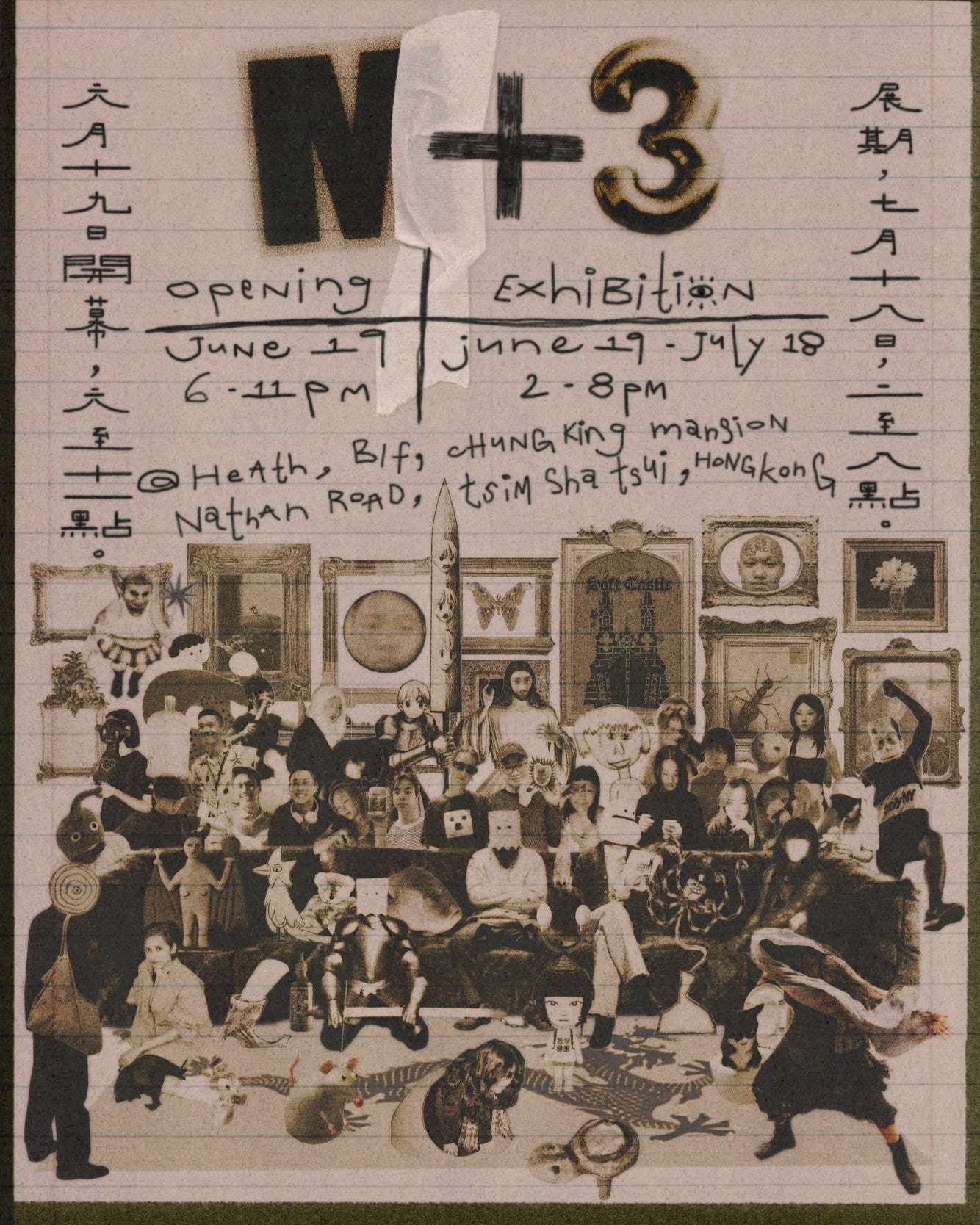
Returning to The Garage at Heath HK beneath Chungking Mansions in Tsim Sha Tsui, the third rendition of N+ Sick Collection runs from June 19th to July 18th. This year, we are thrilled to present a group exhibition of 55 talented Hong Kong-based artists. Blending familiar faces with new voices we have discovered through scouring the nooks and crannies of the city’s artistic landscape, the exhibition reflects a staggering diversity of talent.
As a co-curator of the exhibition alongside my partner, artist Louie Jaubere, I am frequently asked the same question, “how does the annual N+ showcase position itself?” We view this annual exhibition with the weight of a museum showcase, yet one that is defined by a distinct temporal logic. By gathering artists working across vastly different media, the common thread becomes the shared backdrop of the Now — 2026, in Hong Kong.
While the 55 artists explore a plethora of themes, I have observed four major conceptual frameworks shaping the Hong Kong contemporary art landscape this year: Machine and Man, Architectural Psychologies, The Intuitive Psyche, and Subverting Heritage.
These threads are not meant to be a definitive summary of everything the exhibition has to offer. Most of the 55 voices belong to the “nobodies” and the “new” — meaning the artists represented are mainly ones who have not yet been widely institutionalised, deeply researched, or well documented. By championing them, N+ continues its mission to uncover fresh perspectives, offering the foundational support needed to help artists graduate from their “emerging” status into broader, well-deserved recognition.
Machine and Man
Living in the present day, we are no strangers to the overwhelming deluge of information and escalating debates surrounding artificial intelligence. Algorithmic “Brainrot” content dominates the Internet, headlines sound the alarm over the ridiculous water consumption of generative AI data centres, and terms like Techno-Fascism have surged into public discourse. As corporate tech monopolies and state powers increasingly merge to impose digital infrastructure for top-down societal control, it is not exaggerating to conclude that our day-to-day experience with technology has converged into a dystopian sci-fi-esque reality.
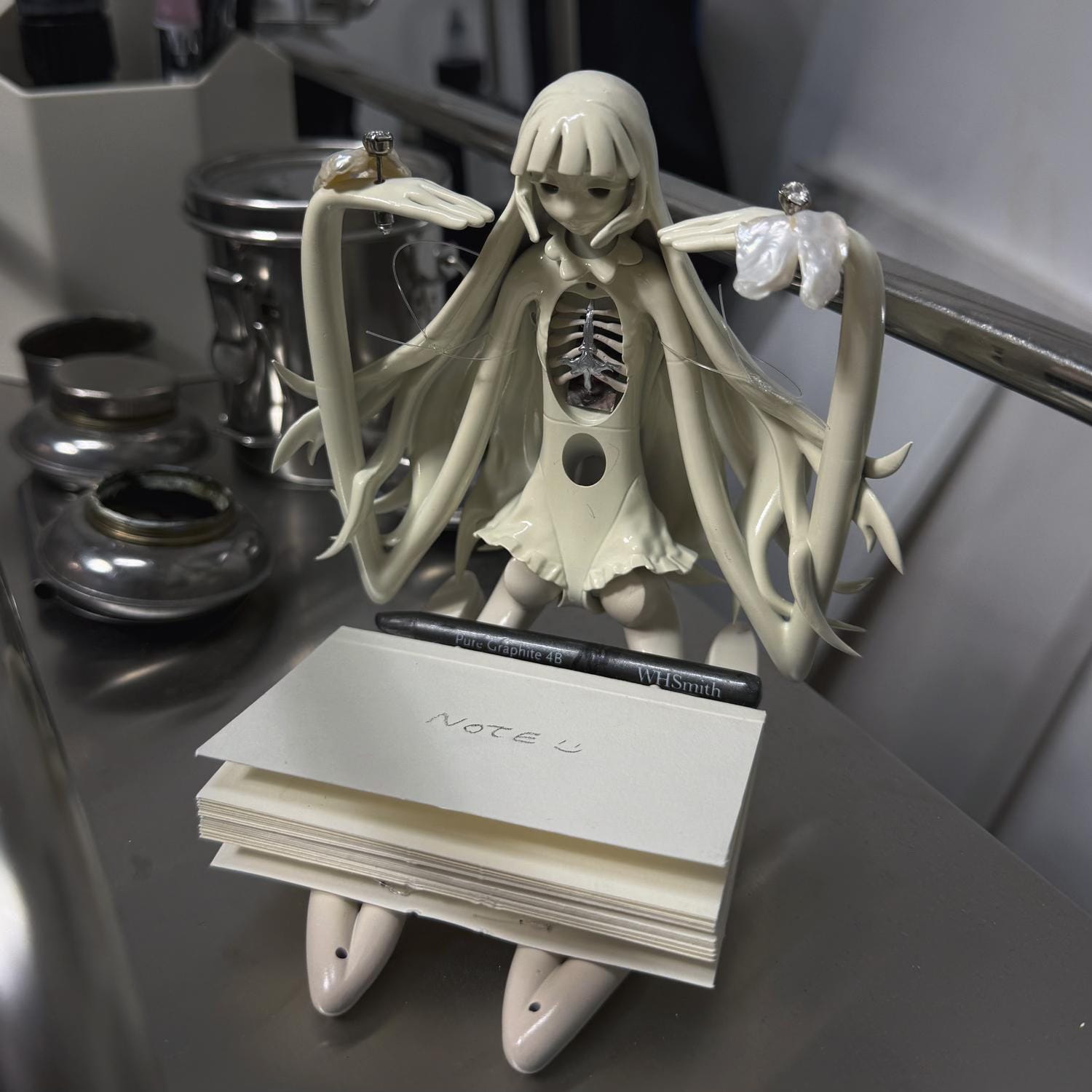
Ram2isflat is a Hong Kong artist working at the intersection of oil painting and experimental sculpture. Through disentangling anime-inspired imagery from its original contexts, he strips it down into a state of structural emptiness that gestures toward the transcendent. Using these hollow humanoid figures, he constructs anthropomorphic sculptures that mimic functionality yet remain intentionally disabled, which in turn become objects that actively resist their own functional forms through distorted materials.
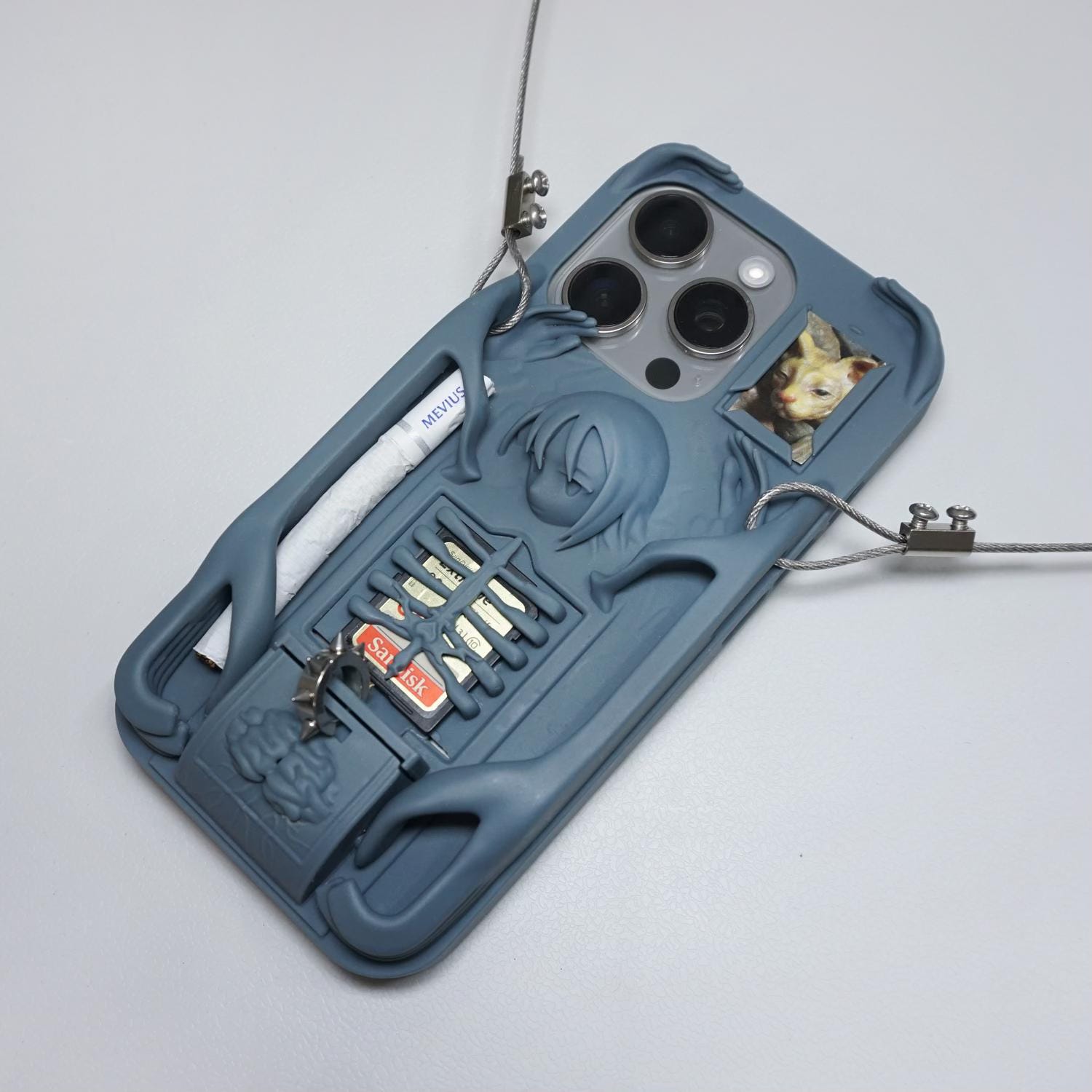
These disabled humanoid sculptures allude to a distinct sci-fi logic in which the human form morphs and adapts its mechanics to survive its environment. Sharing a studio with the artist, I have observed his meticulous process firsthand: from the initial 3D modelling to the exhaustive sanding of individual components before final assembly. His workstation resembles a futuristic temple of humanoid artefacts. Rendered in a clinical palette of uniform silver, white and blue, twisted limbs and exposed ribcage merge into functional phone cases, pen stands, and rings. Lined up nearly on a clinical silver cabinet, they look like the residual products of a scientific experiment — one that deconstructs and reassembles the human body into optimised consumer objects.
On a bus ride home from the studio together, Ram2, Jaubere and I entered an immersive conversation about the ethos underpinning Ram2’s artistic practice. When I asked why he deconstructs the human body only to reassemble it into functional objects, Ram2 argued that the boundaries between humans and tools are inherently blurry.
To break down the concept of the tool, Ram2 posits that, “throughout history, humans utilised tools to push forward the development of civilisation. Tools are an essential part of the sense of “forwardness” and “progress” in human activity. Humans invent and utilise tools with the expectation to achieve things that one would not be able to manifest with one’s bare hands.”
Applying this logic to individual talent, training, and societal roles, humans themselves become tools through which progress is realised, both individually and collectively — whether manifested through personal pursuits, or progress made under the units of corporate targets, communal goals, and altruistic deeds. Within this framework, humans are endowed with an urgent need to optimise their own utility just to position themselves in the world. He added that, fundamentally, man and machine are identical; humans are organic machines designed through Darwinian natural selection. If a certain human functionality is deemed unfit for maximising progress and survival, those traits are eventually culled.
Upon hearing these claims, my immediate impression was that Ram2 possessed a deeply cynical view of humanity. In his work, not only does he dilute the essence of the human experience into mere optimised utility, but progress itself serves as a central anxiety of his own existence. Jaubere interjected, asking if this philosophy of Ram2’s was stemmed from a hyper-individualistic, neoliberal worldview where individuals focus solely on their own trajectories while ignoring the needs of the collective mass.
Ram2 rejected both interpretations. Instead, he reframed the discussion through a broadly Hegelian conception of history—one that views human consciousness, reality, and civilisation as components of a single evolving process. As the bus gradually pulled into the station at 1 AM on a very “standard” Tuesday night, Ram2 delivered a powerful conclusion on his creative ethos, “Human existence is not linear, but moving forward and making progress is the very nature of existence. Human life is finite, yet the experience itself is infinite. We are not sure if our current tools — including the most advanced technology, political theories, and the many discourses conceptualised by the intellectuals of our time will lead us to make progress toward a positive direction. Regardless, progress must be made, since that is the essence of our existence.” Hearing this definitive conclusion, I almost tripped down the staircase on the still moving bus.
Ram2’s functional humanoid sculptures are ultimately less concerned with technology than with the deeper question of progress itself. By collapsing the distinction between human and tool, his work invites us to consider whether humanity directs history, or whether we are merely instruments within a larger process of historical becoming.
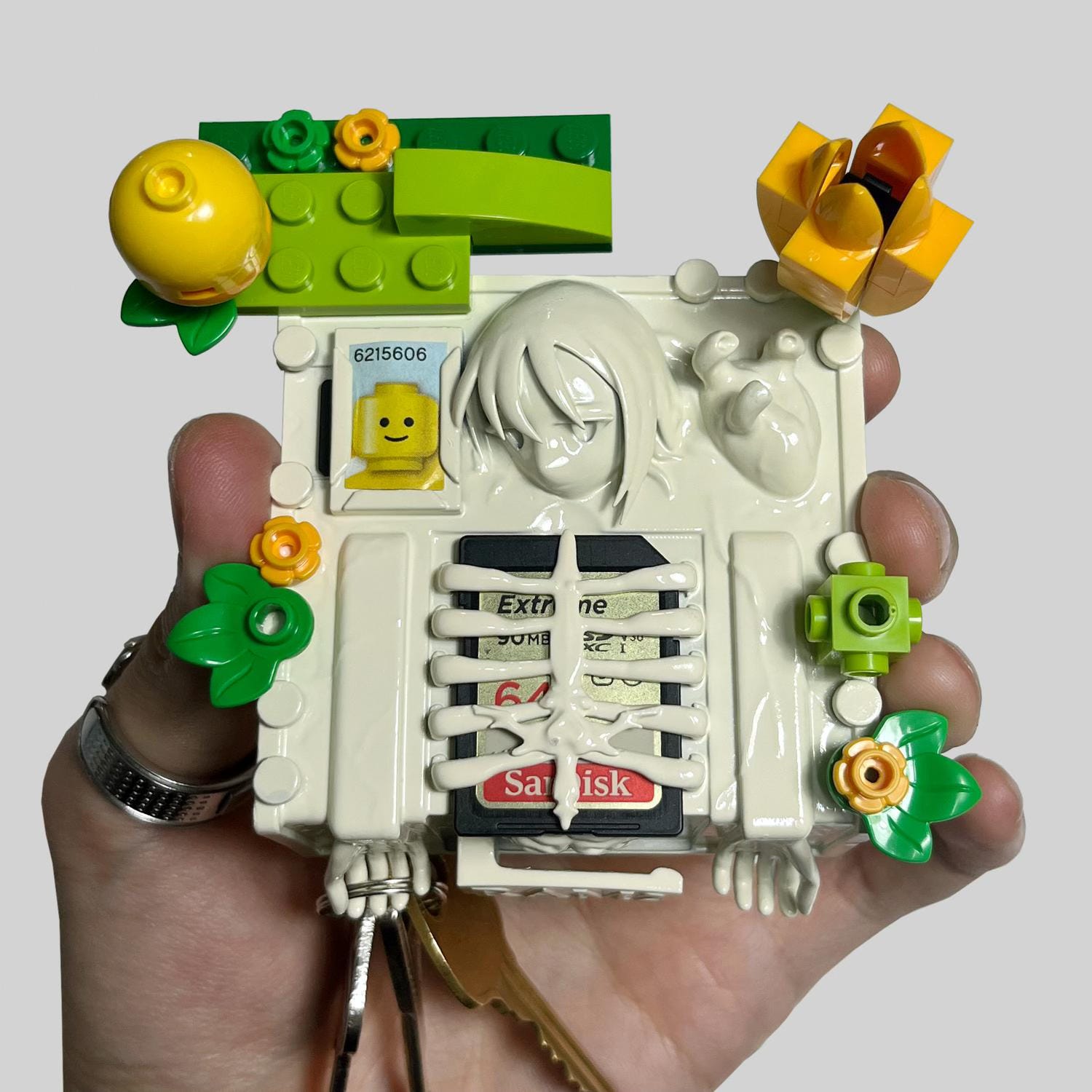
Yet a question remains when approaching Ram2’s artworks, despite his detailed explanation of the ethos guiding his practice. If he is indeed a firm believer that the distinction between human and tool is intrinsically blurred, and that the optimisation of human utility is an inevitable aspect of existence, why do his figures appear disabled, contorted, and wounded? Why are these humanoid forms hollowed out, seated in uncomfortable poses, and marked by their dysfunction? If progress and utility are central to the human condition, why are these sculptures not presented as clean, efficient and fully mechanised bodies?
Instead of providing a resolution to this contradiction, I shall leave it open for viewers to contemplate this tension that exists in his work. It is precisely within this tension between utility and dysfunction, progress and injury, machine and man, that Ram2’s work becomes most compelling.
If Ram2’s sculptures collapse the distinction between human and machine, Jennifer Yeung (artist behind These Faces and engineer of synthesiser NOQUACO), complicates the question further by interrogating the systems within which human agency unfolds. While Ram2 views humanity through the lens of utility, progress, and technological evolution, Yeung turns her attention toward questions of control, simulation, and the uncertain boundaries between reality and its representations.
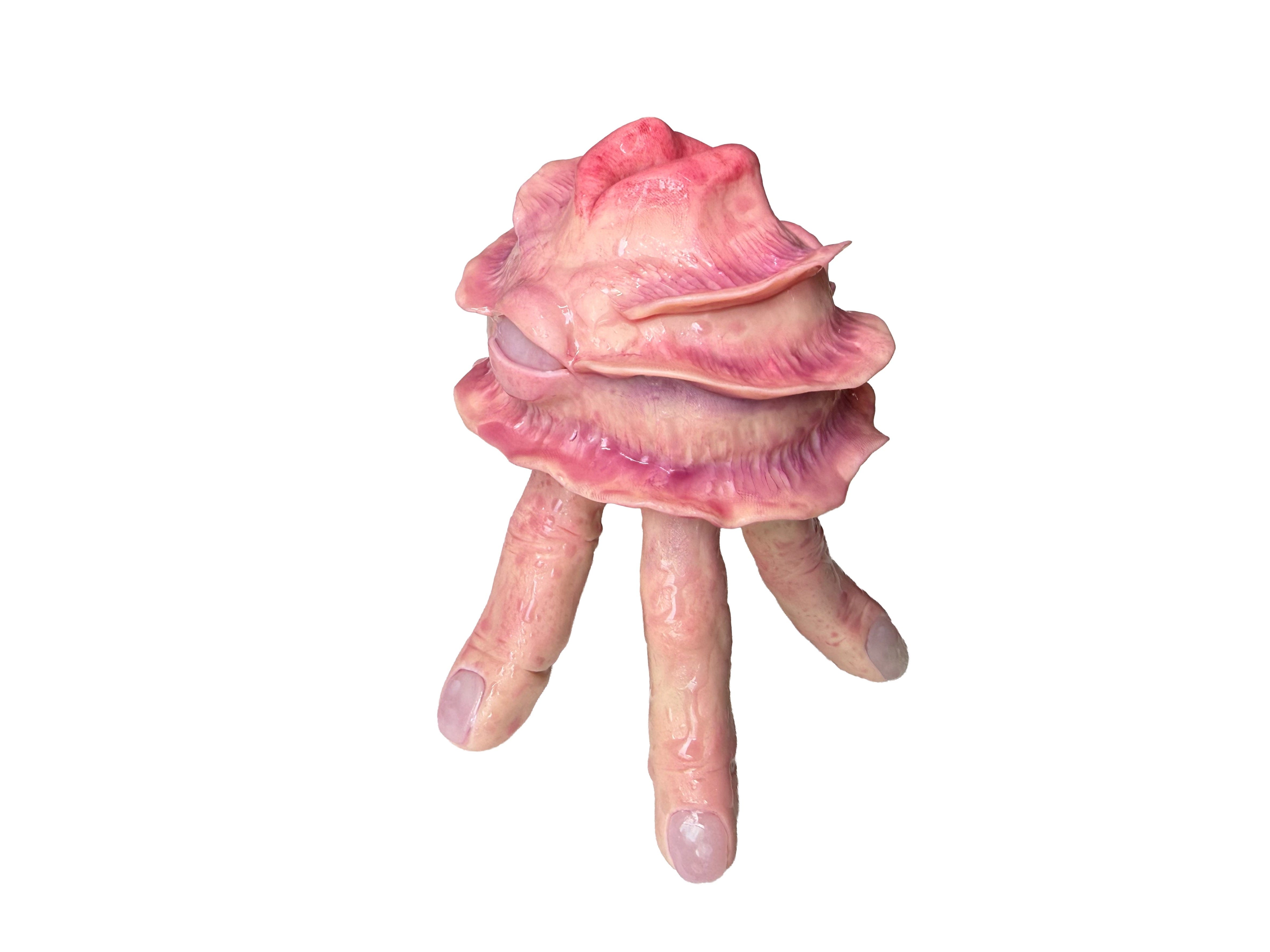
Working under the name These Faces, Yeung’s sculptural and digital practice revolves around the human body as both subject and metaphor. Fusing facial features, bodily fragments, and alien-like organic forms, she constructs uncanny entities that appear simultaneously familiar and foreign. Human flesh occupies as a central motif throughout her work. As she explains, flesh is perhaps the most immediate marker of humanity, hence possessing a unique capacity to draw viewers into a relationship of recognition and identification. It is through corporeal forms that she begins to explore larger questions concerning consciousness and existence itself.
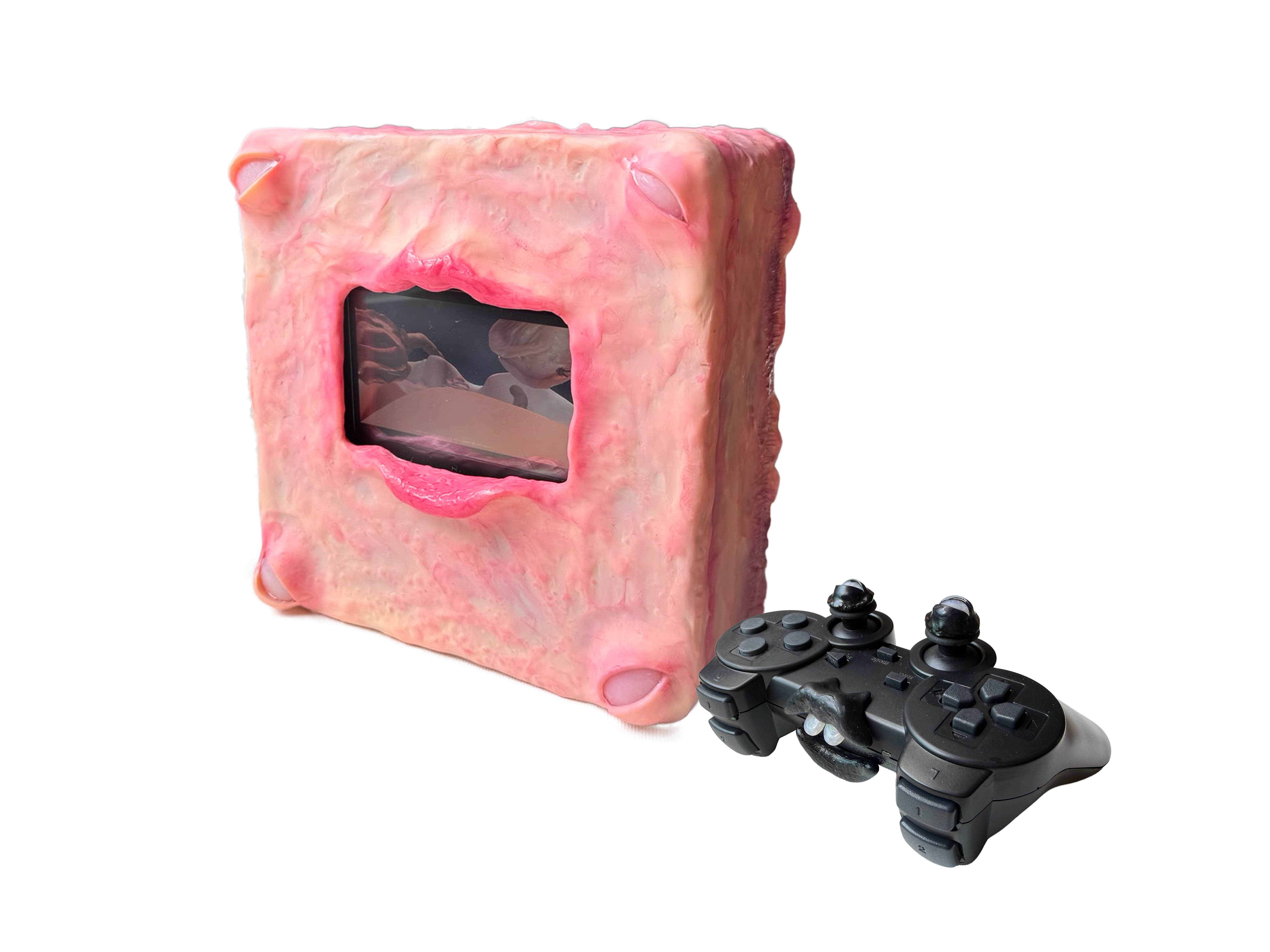
Yeung’s latest mixed-media sculpture features a digital screen embedded within a flesh-like sculptural mouth, “Cory” (2026). Displayed on the screen is a virtual space entitled, “Present_space.122449.1” (2026). Though viewers are invited to interact with the work with a game console, Yeung stresses that the piece should not be understood as a video game but as a virtual space. Unlike conventional games structured around clear objectives and progression, Yeung’s virtual environment encourages viewers to wander, observe, and gradually understand the logic governing its universe.
Her corporeal sculptures oscillates between attraction and discomfort. When I first received images of Yeung’s work, I asked if the sculpture is meant to be an open wound, in which she responded that it is fascinating that I would see the sculpture as a wound instead of its intended form — a mouth. Uncanniness, uncertainty, and perhaps discomfort is central to her manipulation of a corporeal aesthetic. For Yeung, the uncanny serves as a means of disrupting familiar assumptions, and hence encourages viewers’ reflection on the boundaries between what is known and unknown.
To explain the conceptual framework behind her work, Yeung drew an analogy to The Sims. In our conversation via texts, she posed a really intriguing question to me, “Have you ever played Sims? Do you think those characters would ever be able to step out from the digital world and come to our dimension? Probably not at the moment but perhaps there is a possibility that it would happen if technology gets us there.” I personally do think that it would not be possible for technology to reach a point where we could bring the fictitious into reality, but also — we never know. Yeung then further posed a provocative question, if we can exercise omniscient control over the Sims within the game and direct action of digital characters who remain unaware of the larger system governing their existence, how could one be certain that our own reality is not similarly constructed? We experience freedom, agency, and self-determination. Yet, humans remain uncertain, and lack the ability to comprehend the systems that shape the conditions of our existence.
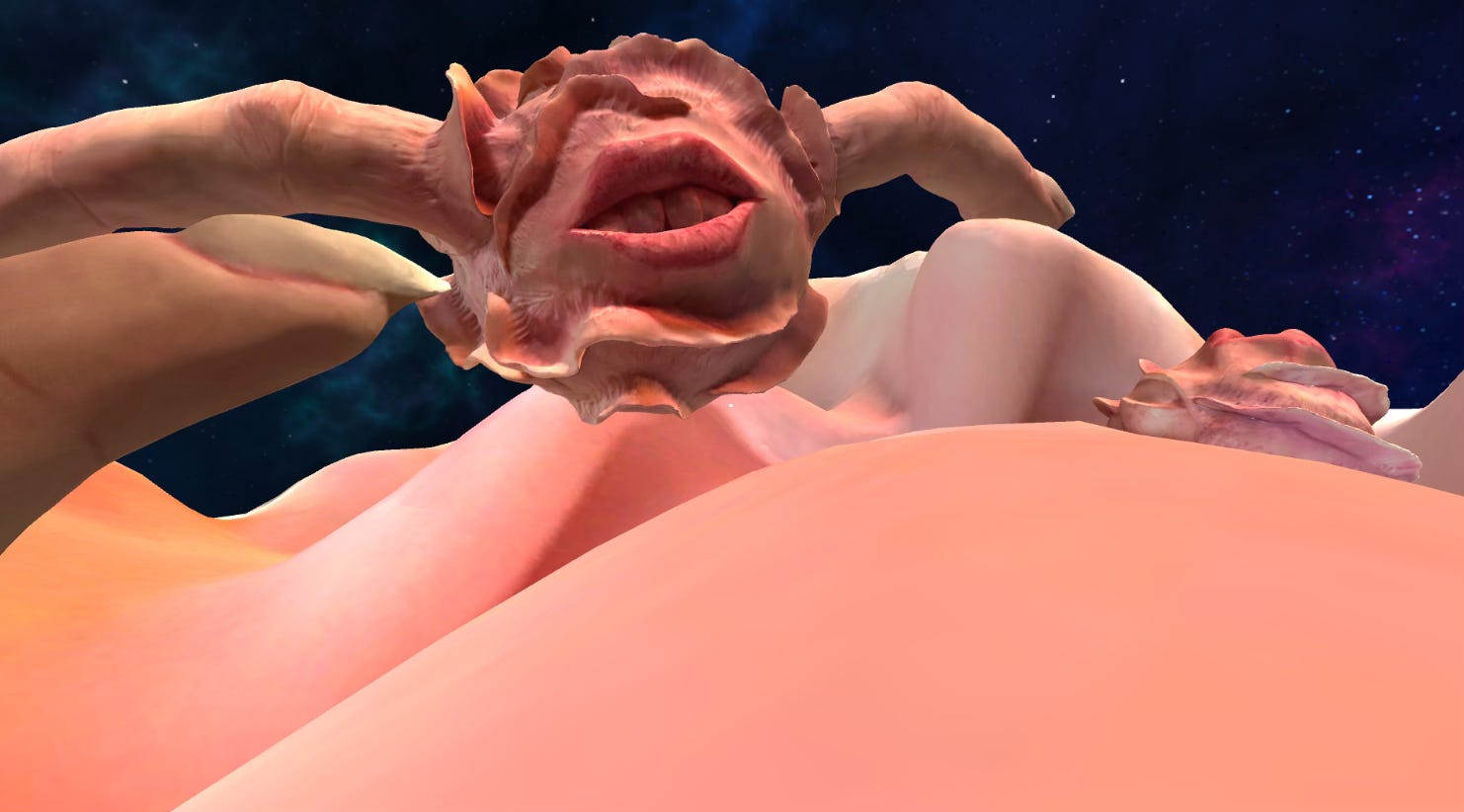
Yeung’s fascination with invisible structures extends into the construction of Present_space.122449. Influenced by her family’s belief in Feng Shui and Chinese fortune-telling, Yeung draws parallels between digital coding and the numerical systems embedded within traditional cosmological thought. Her virtual space is guided by laws of numbers — codes were written to provide a maximum of 49 generated sculptural objects, and 12-24 seconds is the duration of their generation — hence the “122449” in the title of the space. Guided by the numerical rules Yeung constructed for her virtual universe, viewers may regenerate, destroy, inspect, and rearrange these objects — her virtual space in turn would be altered by the viewers while the alterations made remain bound by the logic of Yeung’s constructed system itself. The work hence becomes a reflection on the paradoxical relationship between freedom and constraint that characterises both virtual and physical realities.
Situated within a sculptural mouth and displayed through a digital screen, Cory and Present_space.122449.1 together becomes a portal into larger questions concerning consciousness, reality, and the systems that govern human existence itself. Yet unlike many discussions that position technology outside of nature, Yeung proposes a different perspective. She deems technology a part of nature with the logic that human beings are products of nature, then the technology they create must also emerge from nature itself. The distinction between the natural and the artificial therefore begins to dissolve.
Rather than treating the ambiguity in existence as a source of anxiety, Yeung embraces it. Whether contemplating virtual simulations, fortune-telling, digital environments or human consciousness itself, her work ultimately arrives at an optimistic proposition — we may never understand the systems and forces that shape our existence, and it is that sense of uncertainty that we should learn to live with. In her own words, we should “let go of attachments” (放下執着), and embrace the ambiguities in life as we got a glimpse into the parallels of a virtual simulation and our own existence.
Despite arriving at vastly different conclusions, both Ram2isflat and Jennifer Yeung utilise technological imagery as a means to locate humanity’s position within a rapidly changing world. For Ram2, the machine becomes a metaphor through which he examines the utility of humans, progress and the role of the individual within larger historical and evolutionary processes. For Yeung, digital simulations provide a framework for her to question agency, consciousness and the invisible systems that shape reality itself.
What remains striking is that neither artists appear primarily concerned with technology as an object of fascination, nor stand in a skeptical position in scrutinising the potential effects that technological advancement poses on humanity. Rather, technology functions as their philosophical apparatus through which larger questions about human existence are explored. Whether viewers would understand themselves as tools moving progression in humanity forward, or as characters navigating systems beyond our comprehension, both artists ultimately return to the same question — what does it mean to be human, in an age where the boundaries between machine and man continue to blur?
Architectural Psychologies
While the artists discussed in Machine and Man employ technology, simulation and machinery as frameworks for understanding human experience, another group of artists within N+ 3.0 arrives to explore similar questions through a different set of forms. Instead of turning towards machines, they turn towards architecture. Buildings, rooms, domestic interiors, and urban structures become psychological landscapes, through which questions of greater structures, social relations and behaviour are explored.
Among the artists gathered under Architectural Psychologies, Louie Jaubere approaches architecture less as a physical structure, but as a system through which meaning is organised. Across his recently concluded five-year series, the Collective Dream Wish of Ruling Class Elegance, Jaubere constructed miniatures populated by fragments of contemporary visual culture, historical references, political icons, and found materials gathered from daily life. Beneath the abundance of imagery, Jaubere’s construction of space remained a persistent preoccupation.
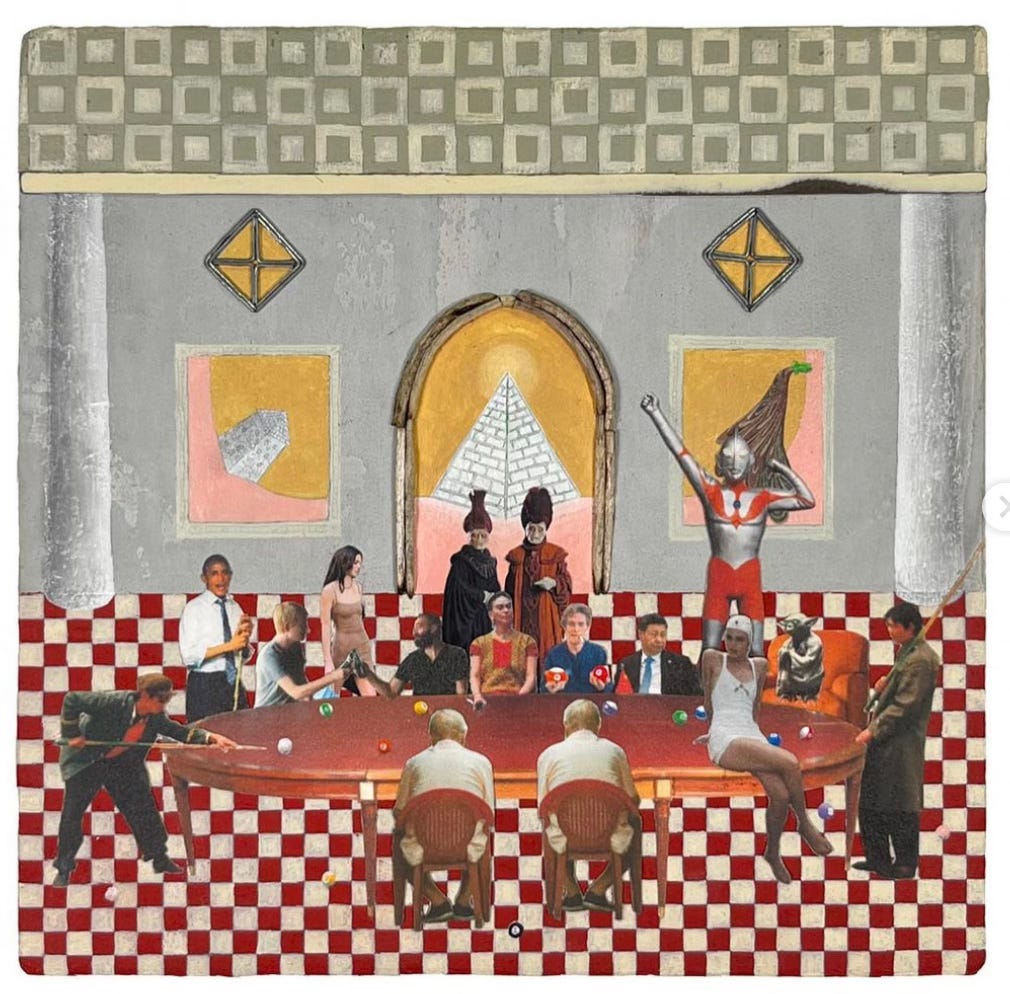
Checked floors, columns, arches, brick walls and theatrical interiors recur throughout his collages and paintings. The spaces within his works seldom adhere to the conventions of perspectives. Instead, they are intentionally flattened, compressed and staged in a manner that is reminiscent of medieval didactic panels, illustrated illuminated manuscripts, and other pre-modern image traditions. When we shared conversation about his recent transition into a new body of work, Jaubere notes that while he is still experimenting with new visual language, imagery and working with a broader research material that backbones his practice, his interest in constructing two dimensional, non-perspectival spaces persists.
Jaubere’s emphasis on spatial construction is inseparable from his use of collage. For Jaubere, collage functions as a lexicon, and a form of visual thinking. Fragments of language, images, historical symbols, Internet culture, and everyday materials are disassembled and reassembled continually into new configurations. Meaning, like his previous series, is never fixed, but remains in constant negotiation. The spaces he creates thus operate less as representations of buildings, but as architectures of thoughts that are assembled from competing signs, references and narratives.
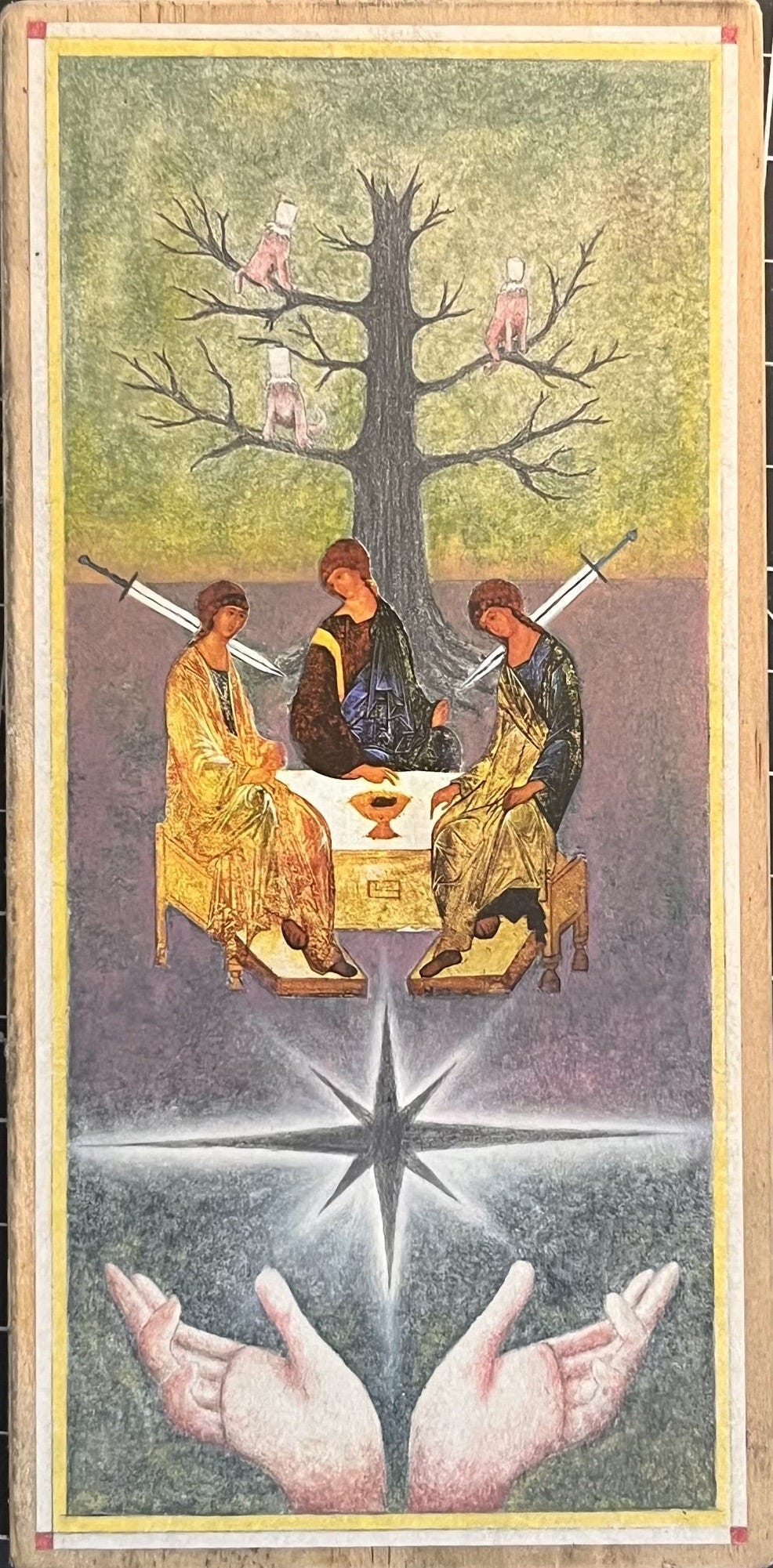
From his constructed environments emerges an ambiguous sense of familiarity and uncanniness. They resemble rooms in governmental structures, grandiose dining halls of the ruling class, interiors of monumental courthouses, cathedrals and at times ordinary rooms and public spaces that welcome the non-ruling class. Moving on from his series entitled, the Collective Dream Wish of Ruling Class Elegance, his spaces continue to function as mental landscapes where systems of meaning collide, and are opened for discussions beyond his question into the power structures that steer the process of meaning making. Architecture, in Jaubere’s practice, becomes a way of visualising how contemporary consciousness is assembled from fragments inherited from history, media, politics, and the day-to-day. Space hence becomes not only environments where one simply inhabits, but are structures one must learn to read.
While the architectural logic in Louie Jaubere’s work serves as a meaning-making system, Jenny To renders architectural spaces as emotional landscapes. Unlike Jaubere who examines the ideological structures embedded within space, To’s paintings explore the psychological atmospheres that emerge from inhabiting, observing, and imagining urban environments. Through depictions of corridors, car parks, empty shops, construction sites, and transitional spaces within Hong Kong’s urban landscape, To evokes profound silence and a subtle sense of the eerie.
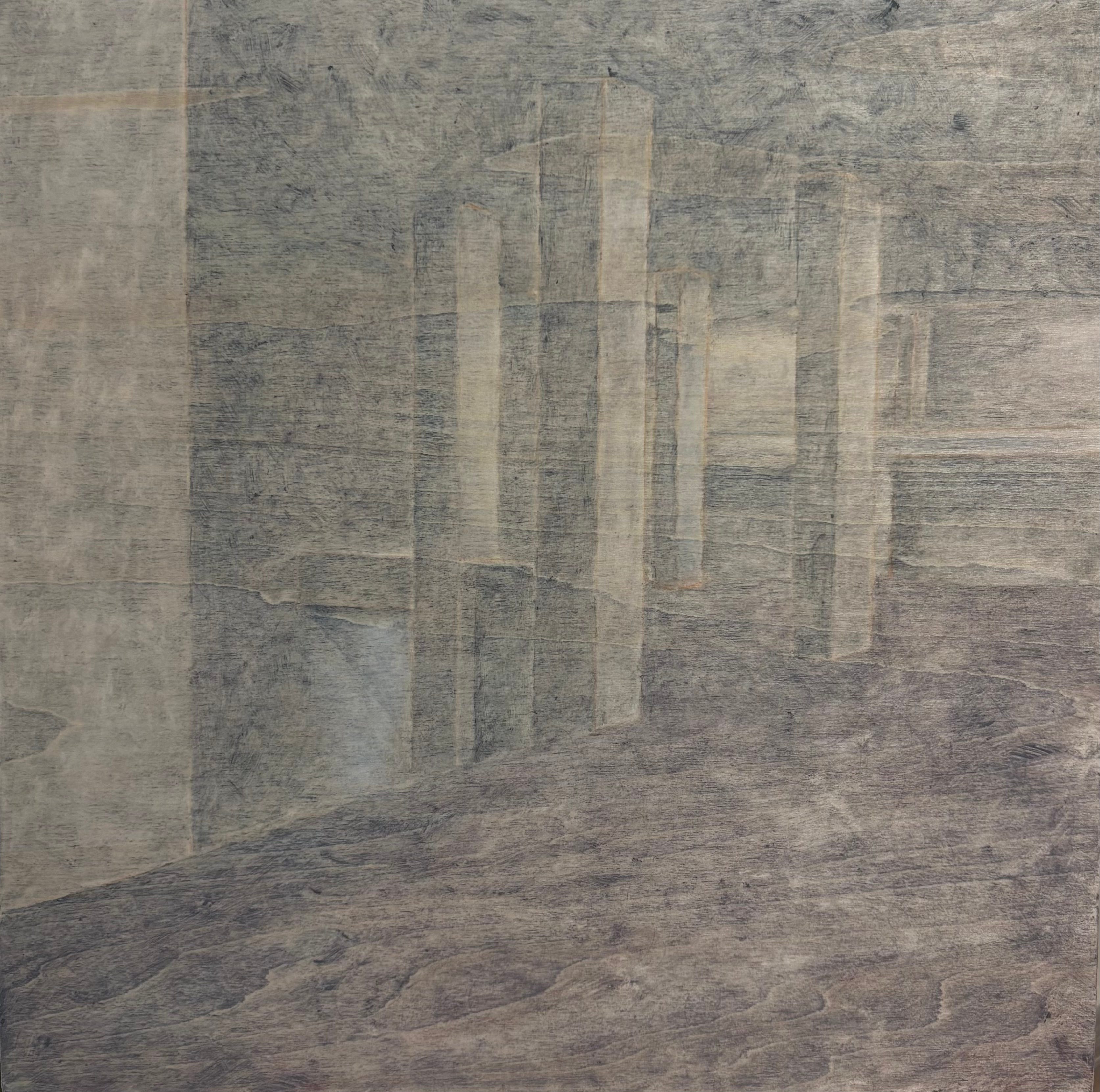
Working primarily in oil on wood, To’s recent paintings combine architectural forms with the natural patterns of tree rings and the structured compositions found in nature. While her subject matter is rooted in locations encountered throughout Hong Kong, these spaces are rarely direct representations of specific sites. Instead, To constructs psychological landscapes through fusing observations, encounters and impressions from multiple environments onto textured wooden panels. Functional details are removed, proportions subtly distorted, and spaces intentionally emptied of human presence. Her manipulation of space results in a visual language that is reminiscent of Internet phenomena such as the “Backrooms”, abandoned buildings, and liminal spaces — where familiar environments become detached from their ordinary functions and acquire an uncanny quality that feels both surreal and unsettling.
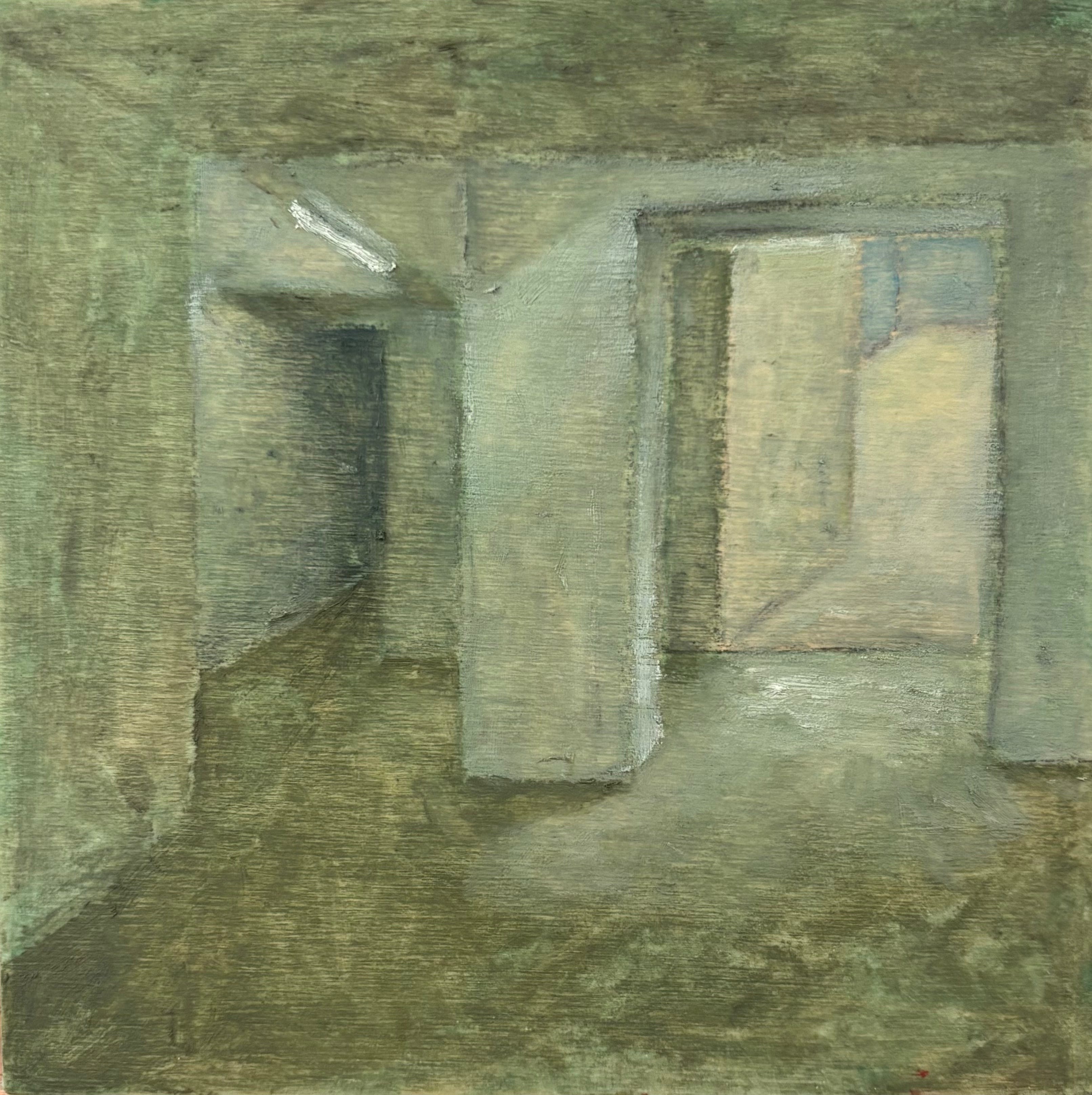
Architecture as a discipline is fundamentally concerned with balancing functionality and aesthetics. For this reason, To’s deliberate removal of the functional qualities that define spaces is particularly striking. In her work, interiors are rendered silent, unpopulated, and suspended in time. When these architectural forms are layered on top of wooden panels marked by organic tree rings, an intriguing tension emerges. The tree rings appear to signify the passage of time, while the depicted spaces float above them in a state of stillness. This material relationship further amplifies the unsettling quietness that permeates her work.
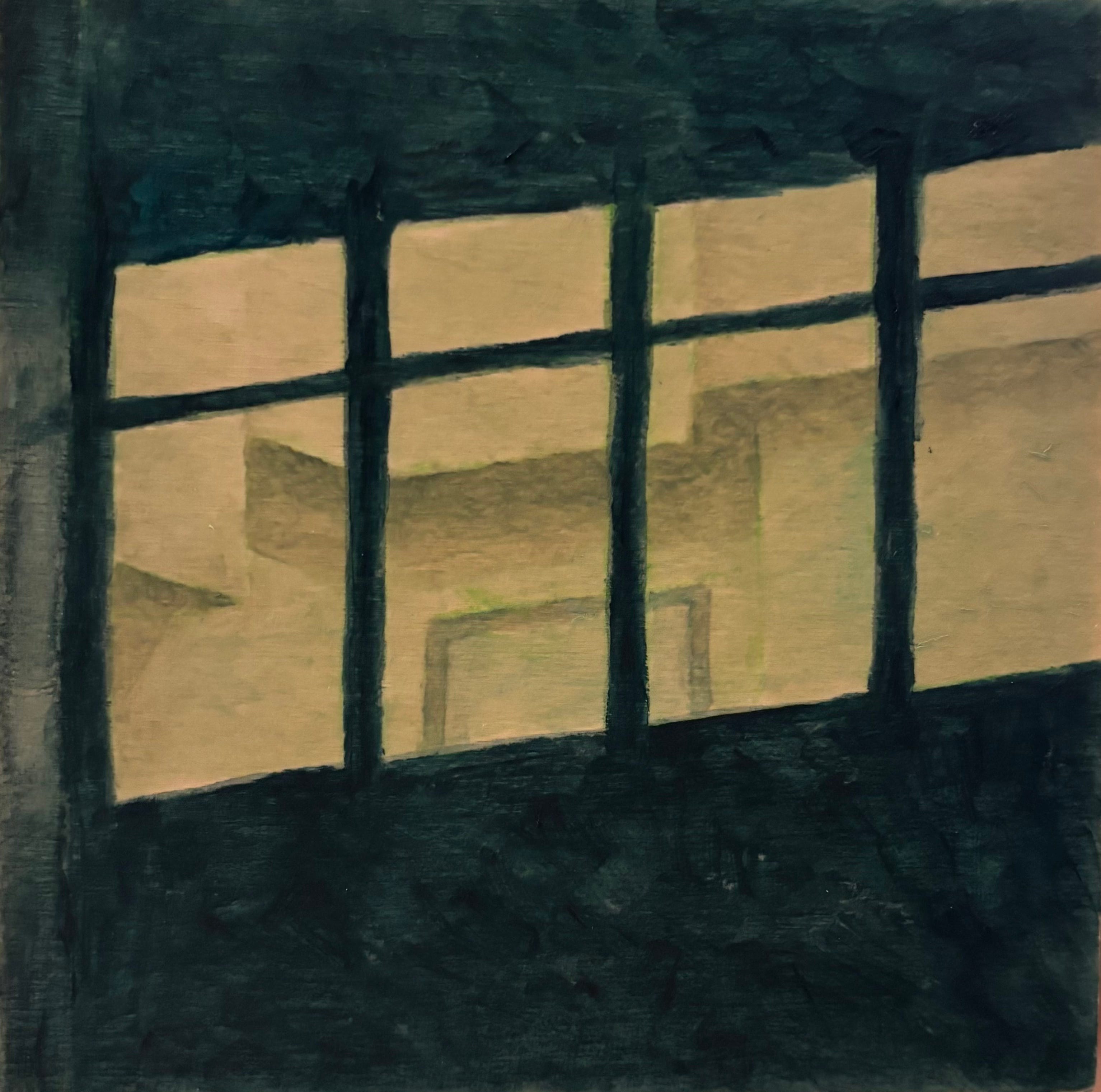
Viewers of To’s paintings often find themselves positioned as observers peering through windows into private interior spaces. During a conversation, I asked whether voyeurism plays a role in her practice. As a viewer, I often experience a strange discomfort when looking into the private spaces implied in her works. Yet the clarity of her compositions and the careful structuring of perspective continually draw my gaze towards these empty interiors. To affirm that this sense of voyeurism is intentional. During her nightly walks, she frequently finds herself peering into windows, fascinated by spaces she cannot enter. The distance between herself and the inaccessible environments triggers speculation and imagination about what exists beyond the glass. She compares this experience to the childhood pleasure of looking into dollhouses — observing a contained, quiet world from the outside.
Jenny To’s approach to architecture is ultimately rooted in curiosity. Her paintings linger within the tension between distance and intimacy, access and exclusion. The spaces she depicts remain familiar yet inaccessible, inviting viewers to project their own narratives into their emptiness. In many ways, this sensibility reflects a distinctly urban condition. Surrounded by countless windows, rooms, and lives that remain beyond our reach as we gaze upon skyscrapers, we are often left to imagine what lies within. Through her quiet architectural interiors, To transforms this everyday experience into a meditation on observation, in-betweenness, and the unknowability of others.
When considering Jenny To’s artworks, I often get this sense that she is a flaneuse of the city. Strolling aimlessly at night, observing spaces, then imagining a narrative for what lies on the other side of the window pane. Similarly, Phoebe R is also a curious flaneuse who walks among the city, and translates her wonder and awe for urban life in her work. While To’s paintings linger within the psychological tension between distance and intimacy, Phoebe’s approach to urban space comes from a very different emotional register — instead of being drawn towards the uncanny qualities of inaccessible spaces, Phoebe is motivated by affection, memory and preservation. Her practice emerges from a sustained attentiveness to the textures, materials and everyday architectures that shape life in Hong Kong.
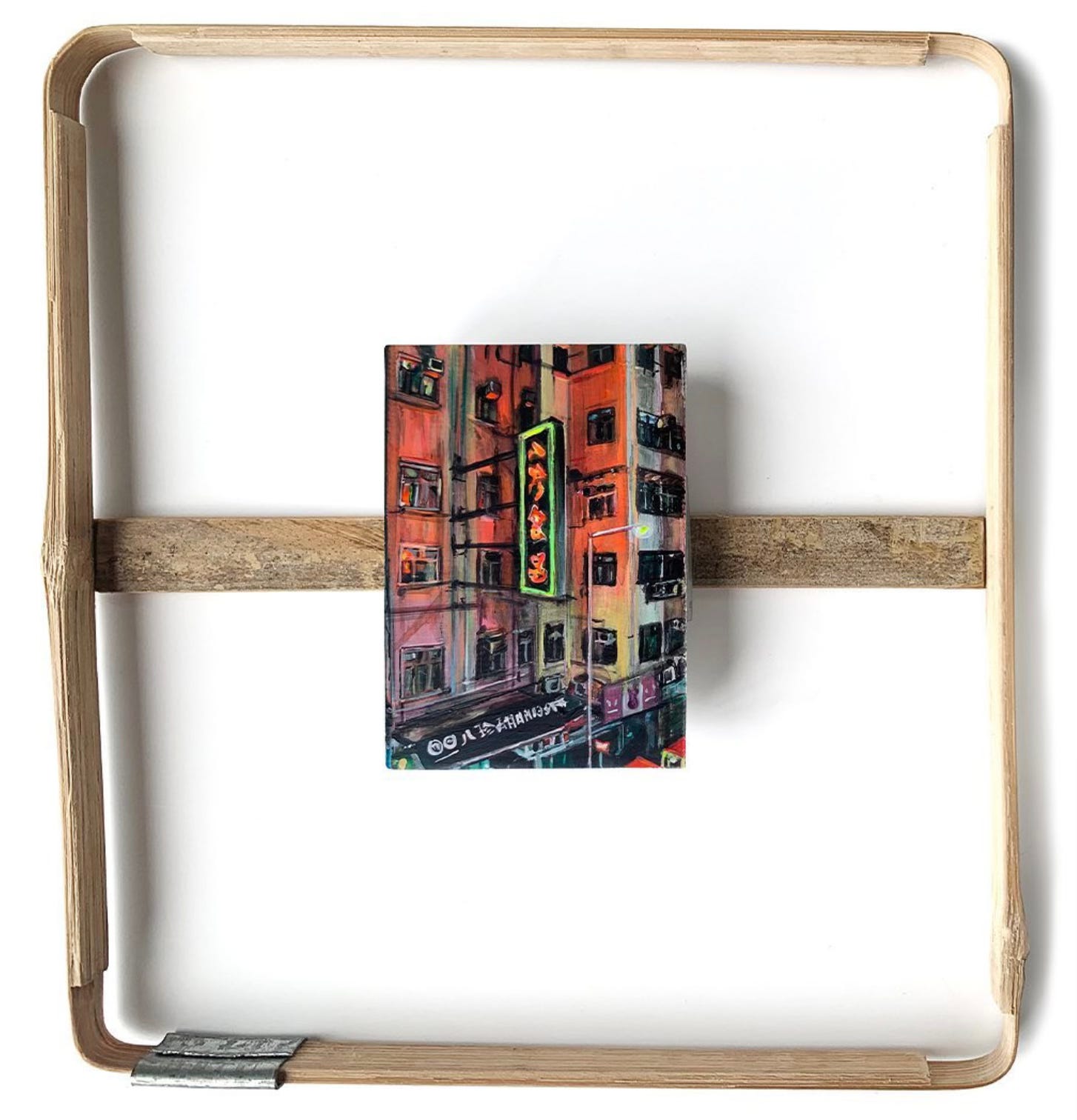
Having arrived in Hong Kong from London in 2016, Phoebe R describes an immediate attachment to the city’s pastel-coloured buildings, bamboo scaffolding, tiled surfaces and street-level communities. Instead of treating these architectural elements as passive backgrounds, Phoebe presents them as repositories of lived experience. The streets, buildings, and materials that populate her work become vessels of collective memory, carrying traces of the people who have inhabited them over time.
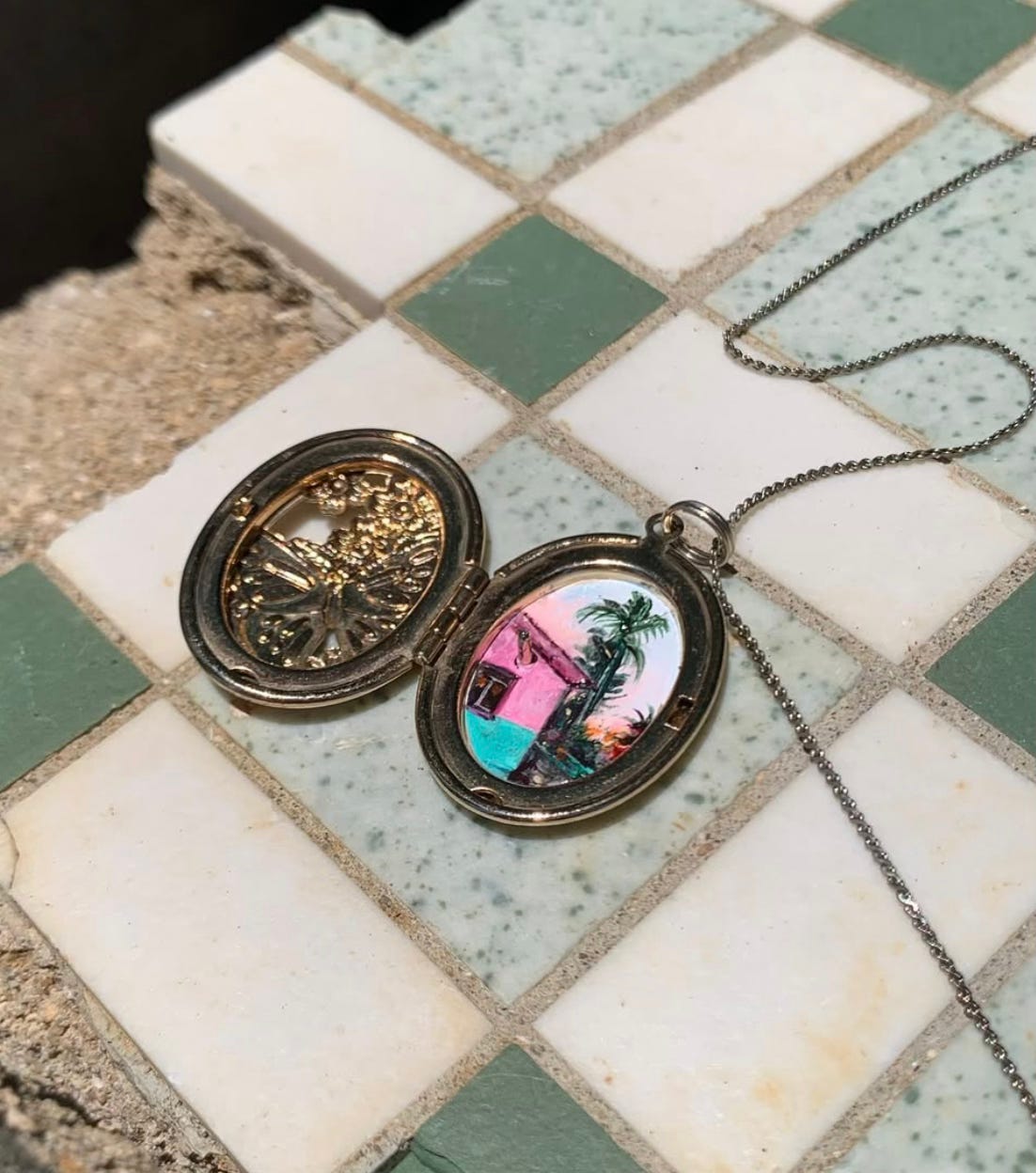
Primarily working with miniatures, Phoebe’s paintings are often palm-sized, and at times no bigger than one’s fingernail. During a conversation with Phoebe as we collaborated on an exhibition earlier this year, she shared with me the concept of locket that underpins the miniature scale of her practice. Between 2019 - 2022, Phoebe experienced a period where many of her friends were leaving Hong Kong to other countries. In light of constant farewells, Phoebe wished for her friends to be able to carry a piece of the city with them. Hence, she started creating miniature paintings that function almost like lockets worn since the seventeenth century, where portraits of loved ones could be kept close to one’s heart. In this sense, Phoebe’s depictions of Hong Kong become tender and sentimental portraits of a city she and her loved ones deeply cherish. The skyscrapers and concrete structures she paints are not mere architectural structures, but vessels of lived experience, memory, and belonging. Painting thus becomes an act of active preservation, one that is done consciously to remember places, atmospheres, and moments that remain constantly in flux, and fleeting.
Phoebe’s sentimental and witty fusion of materiality and memory became particularly evident in The Gold of Trees series created in 2020. Made in collaboration with Orange Terry, the frames that hold her delicate miniatures were constructed with recycled construction bamboo. The textures in the bamboo frame thus create a direct dialogue between her photorealistic depictions of Hong Kong, and one of the city’s most recognisable construction materials. In her more recent Bamboo II series, this relationship becomes more explicit. Phoebe collects naturally fallen pieces of dried bamboo from the paths surrounding her home. She carefully cuts, sands, sorts, then at last binding them together using techniques that resemble traditional bamboo scaffolding. The resulting frames do not merely surround the paintings, but physically embed the material culture of Hong Kong into the artworks themselves.
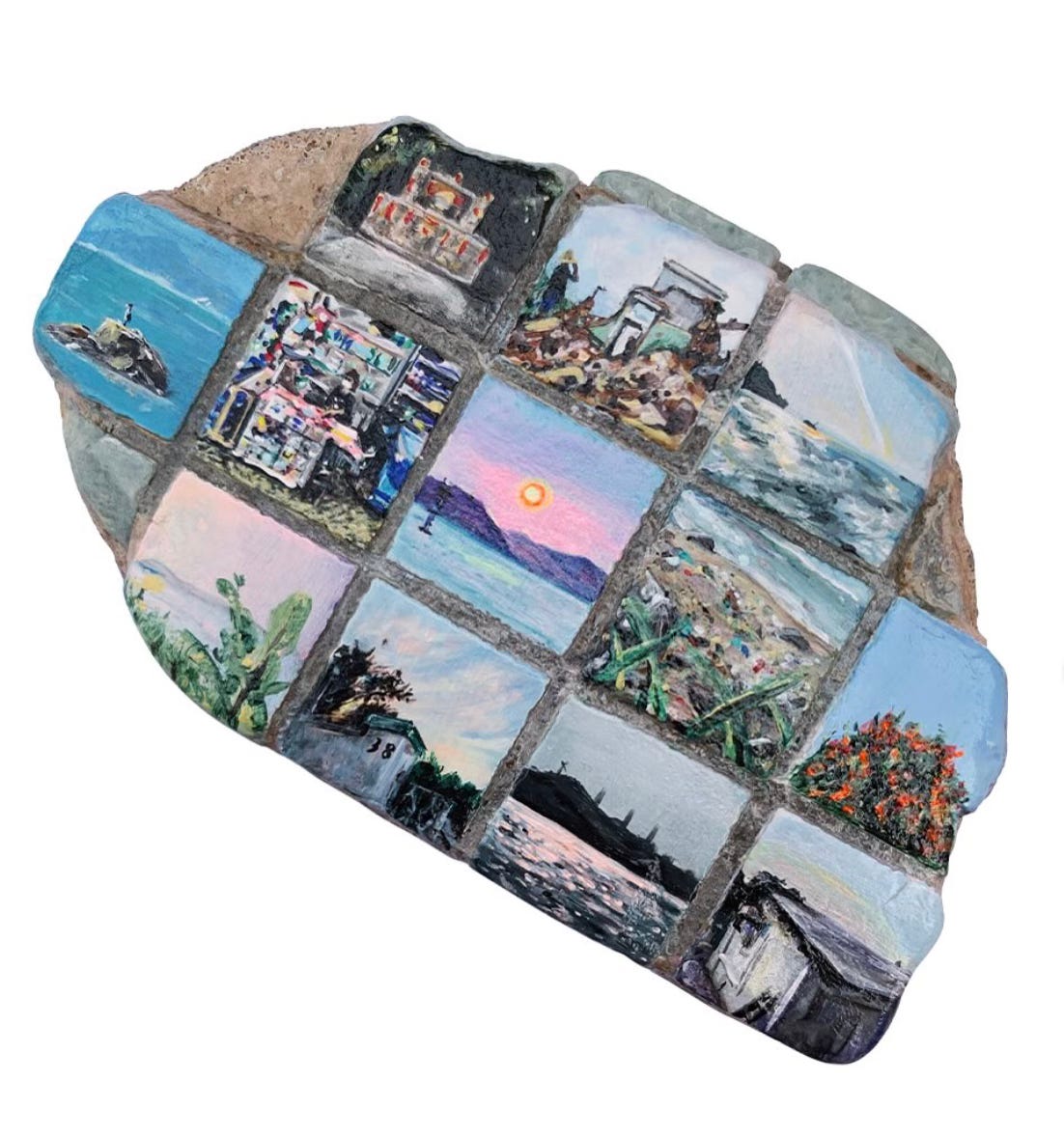
Her sensitivity towards material and tactility extends further in her tile paintings. Using discarded tiles recovered from beaches and demolition sites, Phoebe transforms fragments of former homes into painting surfaces. To Phoebe, the tiles are vessels that carry traces of their previous lives — once decorative and protective elements of domestic spaces, they now exist as weathered remnants detached from their original contexts. Collecting these fragments for Phoebe carries a similar excitement and weight as collecting precious stones. Though not similar in monetary value at all, the tiles had a deep emotional quality that no precious stones could hold. The tiles are small relics of community, they hold the memories of the spaces and people who once lived alongside them. Reflecting on her own home, her house was built by its owner who personally selected and installed every tile across its floors, walls, and ceilings. Phoebe recognises that architectural materials are never merely functional. They are repositories of labour, attachment, and lived experience. Through painting on these fragments, she transforms them into acts of remembrance, allowing the physical fabric of Hong Kong to continue carrying stories into the future.
Phoebe R’s attention to the smallest details of the city — from the facades and proportions of its buildings to the sentimental qualities embedded within construction materials reflects her profound affection for Hong Kong. Through her photorealistic miniatures, she preserves the emotional textures of everyday life in the city against the inevitability of change.
While Louie Jaubere, Jenny To and Phoebe R approach architecture in the different approaches as ideological structure, psychological atmosphere, and repository of memory, KK Cheung collapses the distinction between the built environment and the human body altogether. Through sculpture, she examines the overlooked relationships between urban materials, infrastructures, and human existence by treating the city itself as a living organism composed of flesh, bone, and memory.
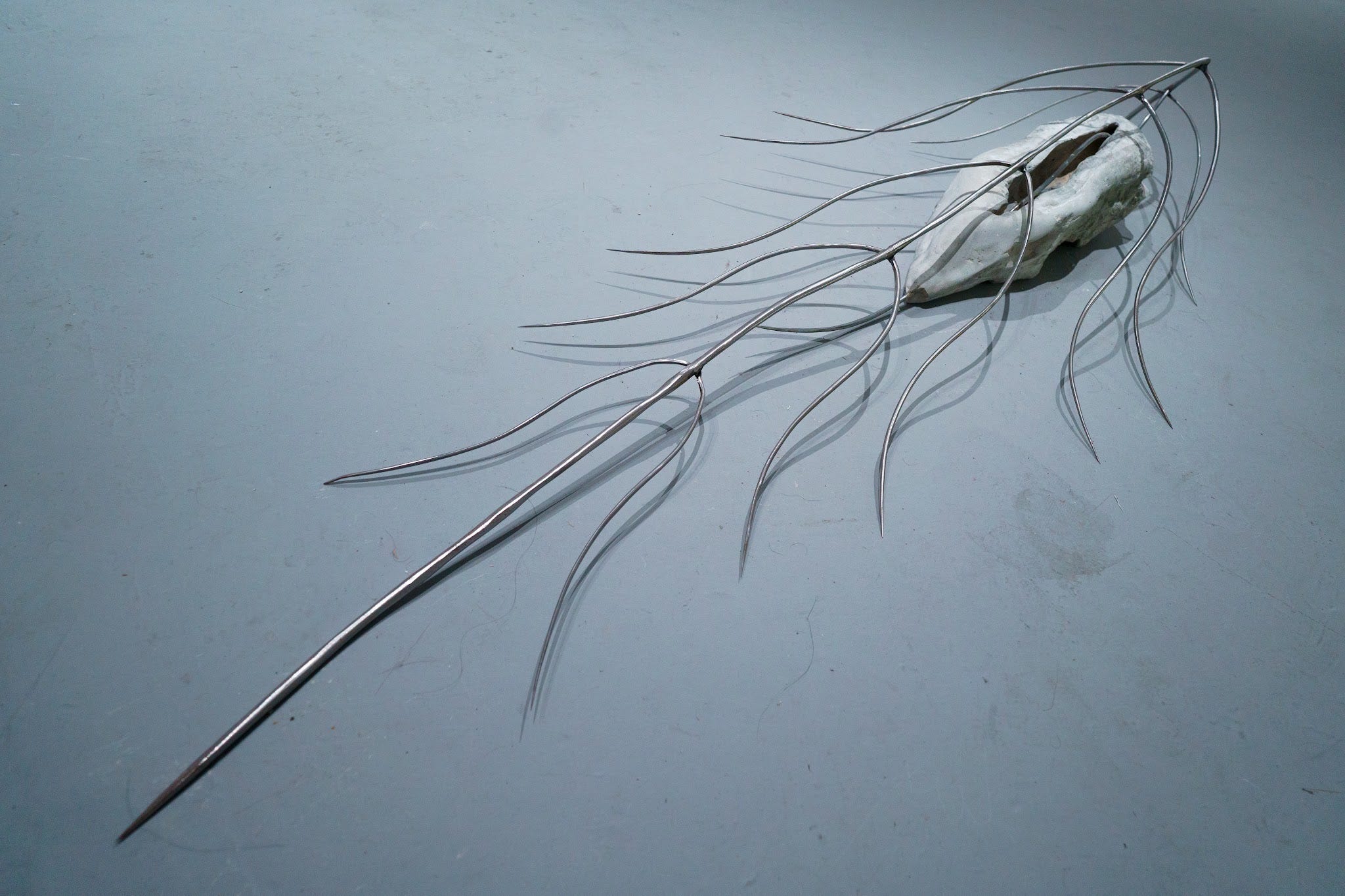
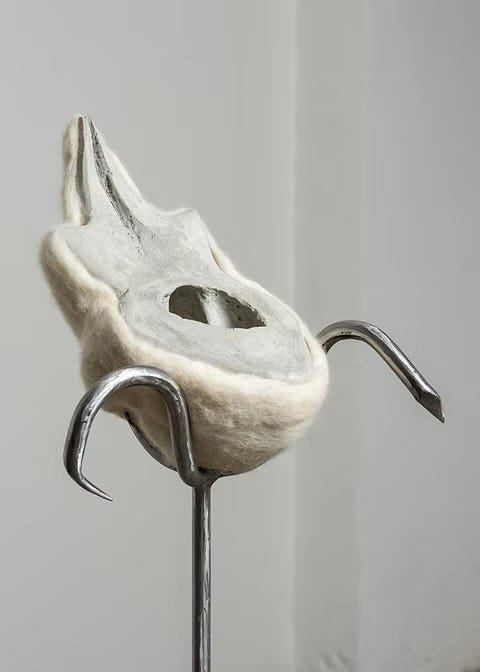
Cheung’s practice came about from an everyday observation of textures within the city. Looking at a metal gate fixed onto a concrete base, she noticed how corrosion from the steel left reddish traces running down the concrete surface. The aesthetic and the relationship between the materials reminded her of blood staining flesh. Steel reinforcement bars became analogous to bones, concrete became flesh, and the reddish rust became blood. From this observation, Cheung began to fuse industrial materials with organic qualities within her sculptures, and the result of such witty use of material transforms architectural structures into corporeal forms.
Observing Cheung’s pieces, I was intrigued by how the same materials of steel and concrete could produce vastly different sensibilities. Some of her sculptures appear structural and architectural, resembling remnants of an unknown civilisation or fragments of urban infrastructure. Others take on a distinctly organic appearance, evoking bodily forms and living organisms. Cheung explains that these tendencies in her work stem from two different approaches within her practice. While some works emerge from systematic research into urban systems, boundaries, and landscapes, which these work would result in forms that are deemed more rational, others are driven by reflections on interpersonal relationships and lived experience in which those works would take on forms that are more organic. If the former approaches the city through rational frameworks, the latter treats architecture as an extension of the body itself.
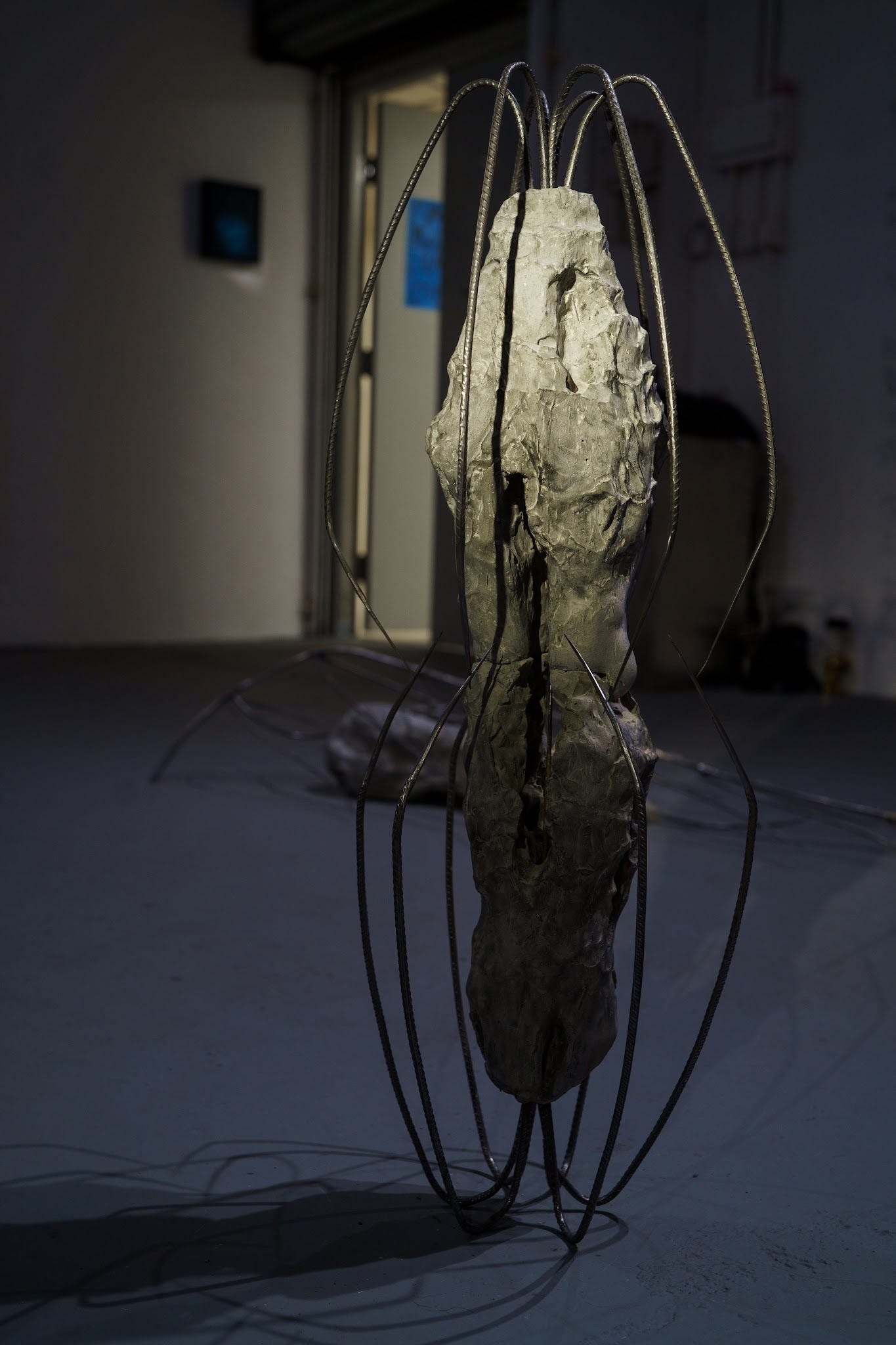
What I find particularly compelling in Cheung’s work is that she explores human relationships through materials that are often associated with coldness, rigidity and structural function. Her sculptures require a high level of precision; steel beams must be bent and assembled with exactitude, and many of her works are constructed in separate components before fitting seamlessly together as a single form. Despite their industrial materiality, these sculptures possess a surprising vulnerability. The tension between structural stability and fragility mirrors the precarity of human relationships themselves. When I asked Cheung why she chooses to work with steel and concrete, and why forms created with these materials allude to the body, her answer was precise and simple — she likes their coldness. Her preference in material opens up a provocative possibility. In Cheung’s practice, the body is not imagined as soft, warm, and entirely organic, but as structures of hard materials continually subjected to pressure, support, deterioration and repair. Perhaps through our relationship with others and with the world at large, rather than through the body alone that these cold structures become animated and alive.
While the artists discussed in Machine and Man turned towards technology, simulation, and machinery to understand human existence, the artists gathered under Architectural Psychologies ask similar questions through the language of space. Across their practices, architecture is no longer treated as a neutral backdrop for human activity. Instead, it is actively reconsidered, deconstructed and reconstructed as an active framework through which memory, emotion, ideology, relationships and identity are negotiated.
Whether through Louie Jaubere’s symbolic interiors, Jenny To’s uncanny liminal spaces, Phoebe R’s architectural remembrance or KK Cheung’s corporeal sculptures of steel and concrete, architecture becomes something far more than mere buildings and infrastructure. It becomes a way of thinking. The city, the room, the corridor, the scaffold, and even discarded tiles become active sites in which these artists attempt to locate themselves within a rapidly changing world.
A key overarching concept in the four artists’ work is that architectural spaces when inhabited, lived, and reconsidered, they become psychological spaces. They are projections of curiosities, memories, anxieties, desires and observations accumulated through lived experience. If machines offered one framework for understanding humanity’s position within an increasingly technological age, architecture offers another: a language for artists to make sense of structures — both physical and invisible, which shapes the world we live in, influence the ways we live, relate to one another, and ways to position our place in the big wide world.
The Intuitive Psyche
Although many of Sigmund Freud’s theories have been challenged, revised, and debated over the past century, his influence on art history remains undeniable. The emergence of movements such as Surrealism, Vienna Secession, German Expressionism and various forms of abstraction expanded the possibilities of artistic practice by legitimising dreams, emotions, anxieties, desires and the subconscious as subjects worthy of investigation. Art became not only a means to represent the external world, but also a way to navigate the interior landscapes of the mind.
The artists gathered under The Intuitive Psyche do not necessarily work within psychoanalytic frameworks, nor do they consciously seek to visualise Freudian concepts. However, their practices share common investments in intuition, emotional reflection, and the often elusive processes through which inner experiences take form. Rather than beginning from fixed systems, research methodologies or external structures, these artists frequently allow feelings, memories, impulses and personal sensibilities to guide the development of their works.
What emerges from the artists’ practices is not a singular psychological narrative, but a collection of visual languages that are encoded in deep personal experience and reflections. Their works may have originated from individual experiences, emotions, and subconscious motivations. However, once presented to the public, they become open arenas of interpretations. Viewers would inevitably encounter and interpret their works through the lens of their own memories, desires, anxieties and lived experiences. In this sense, artworks created with an intuitive logic occupy a unique space — it is simultaneously manifestations of the artists’ inner world, and an open arena for viewers’ own projections.
David Chan is a particularly interesting figure to consider when discussing intuition in artistic practice. By “figure”, I mean that he is very much a character. My first encounter with Chan’s work was at his solo exhibition following his artist residency at Ejar Ragora in 2024. Upon entering the space, murals and drawings resembling ancient scriptures stretched across the walls from floor to ceiling. Wooden sculptures and what appeared to be an amputated tree growing from a piece of rock occupied the room amongst these markings. I was at the same time baffled and in awe. The exhibition felt less like entering a traditional white cube space but stumbling into a freshly excavated cave belonging to an unknown civilisation.
The encounter prompted me to ask David what seemed like an obvious question. I wondered whether what Chan calls an “intuitive” approach shared any affinities with the Surrealists’ notion of “automatism”. Chan responded with an awkward laugh and immediately dismissed the comparison. “It’s not Surrealism,” he replied. “I don’t follow any historical conventions or -isms. I just work with pure intuition.”
His response was striking because the visual language of his works appears so readily legible through art-historical frameworks. Viewers may see traces of spirituality, ritual, mythology and archaeology within his objects. Yet Chan insists that these associations are not at all exact “goals” of what he intends to be interpreted as he makes the artworks.
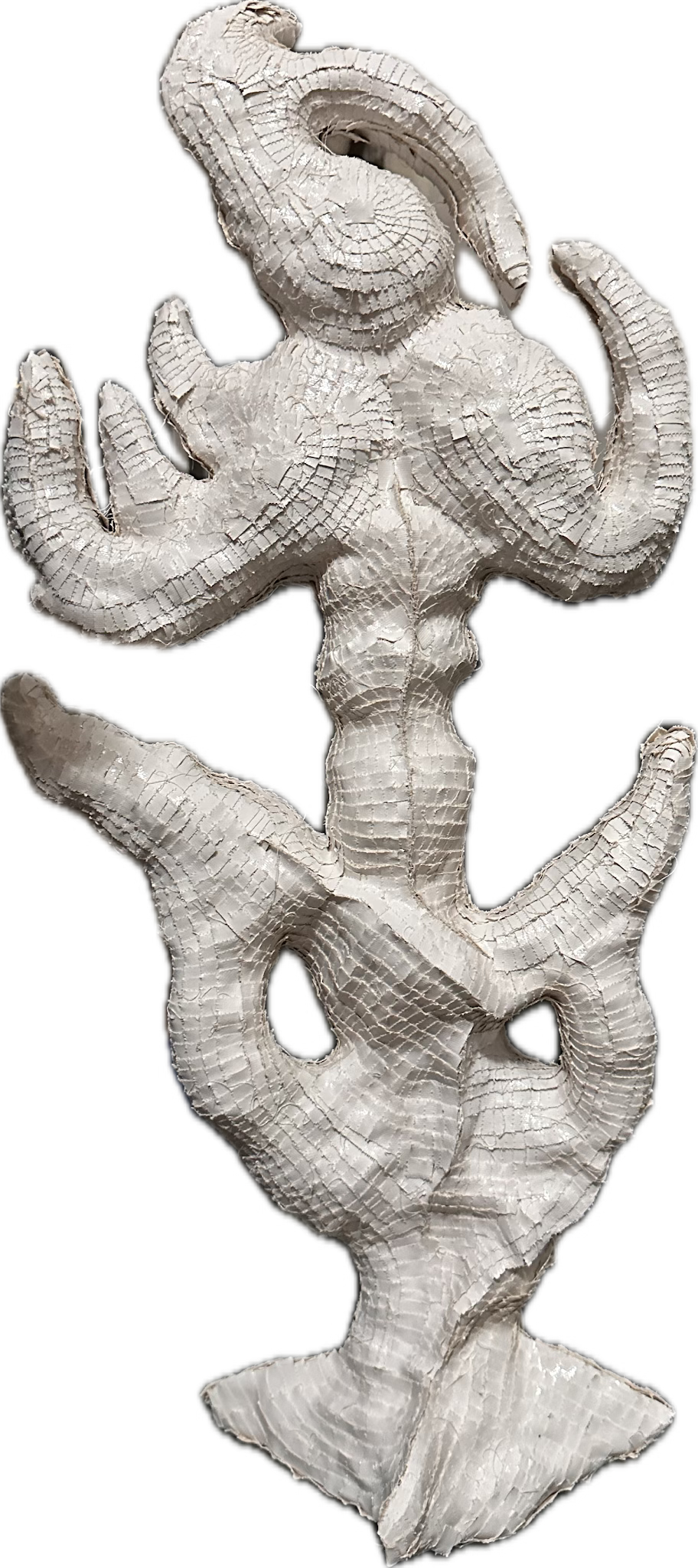
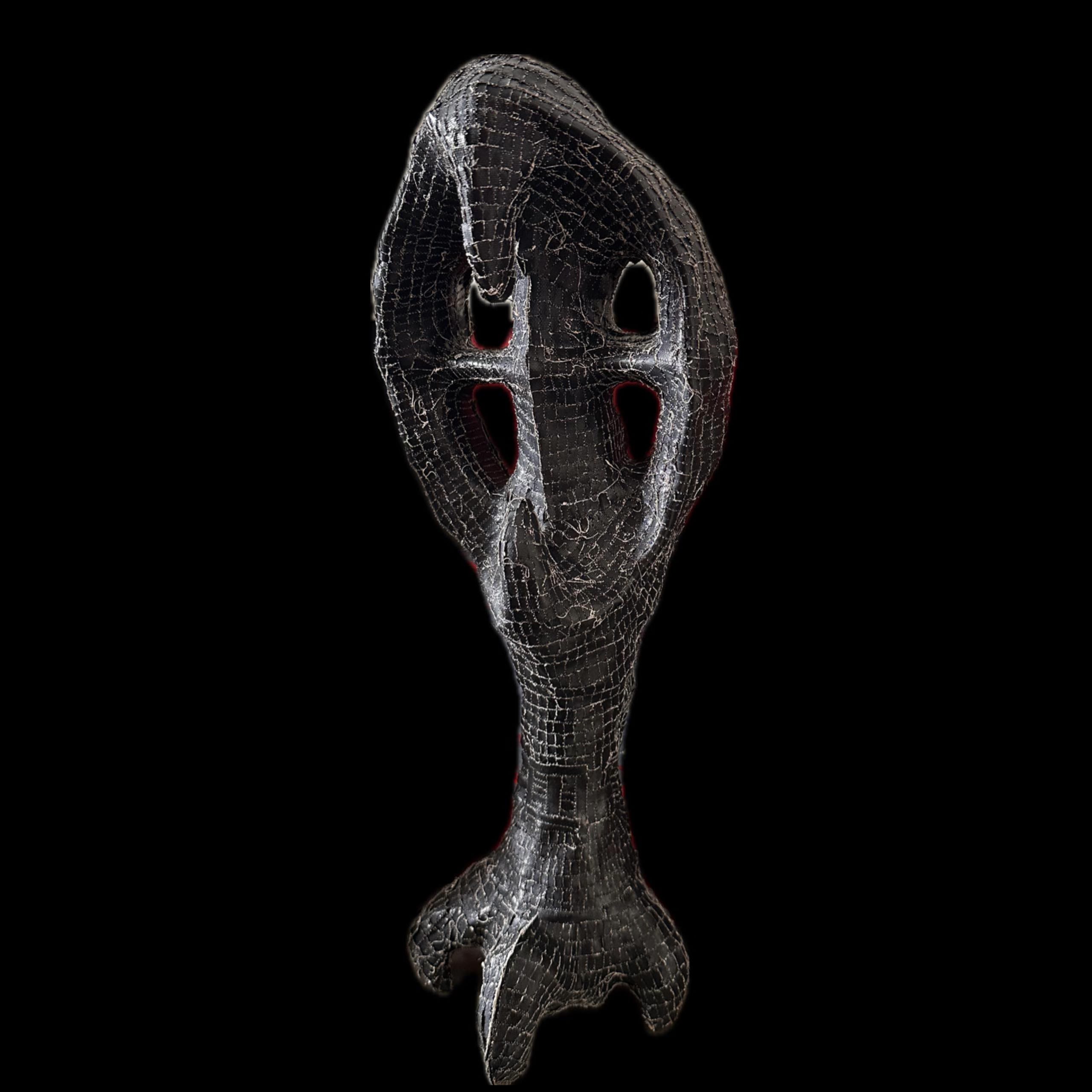
David Chan places intuition at the very centre of his practice. Working primarily with painting, sculpture, and mixed media, his works often resemble fragments excavated from ancient civilisations. Organic sculptural forms, symbol-like drawings, weathered textures evoke ritualistic and archaeological imagery recur throughout his practice even though he did not consciously draw inspiration from specific mythology, religion or esoteric systems. Instead, Chan insists such associations emerge intuitively. His emphasis on intuition stems from an inexplicable drive to create. In his own words, “I just have this drive to make things. I cannot pinpoint why I want to make art. I also cannot pinpoint what exactly viewers should take away from my artworks.”
Yet, there see traces of how his intuition is influenced by the aforementioned concepts and aesthetics. Chan I and shared conversations on his frequent visits to Cat Street in search of antiques and Buddhist iconographies, as well as his habit of hiking through abandoned sites in the rural landscapes of Hong Kong. Perhaps these everyday encounters of Chan where he exposes himself to weathered artefacts in the flea market, forgotten architectures in the wild and the traces of natural decay seen on them have quietly cemented themselves within his subconscious mind. Though not consciously referenced, they seem to surface repeatedly in his works that evoke similar sensations of age, mystery, and historical distance.
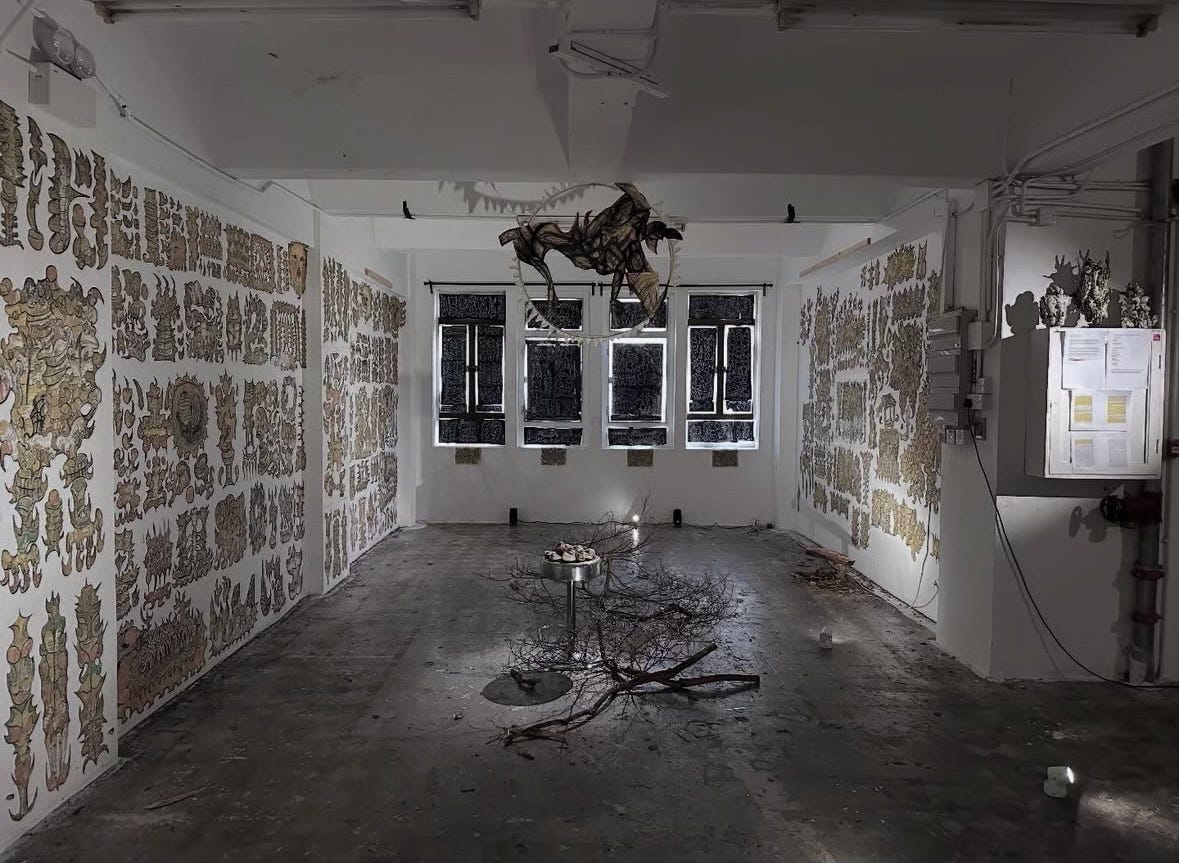
Chan’s emphasis on intuition does not result in chaos. Instead, it produces a language that feels internally coherent despite resisting clear interpretation. During his 2024 residency and exhibition at Ejar Ragora, found objects were transformed through processes of reshaping, layering, and recombination. The resulting installation resembled a fictional archaeological site populated by relics from far away civilisations. Totemic forms, script-like symbols, and hand-built structures occupied the space without offering viewers a definitive narrative. Rather than communicating fixed meanings, the works existed as a self-contained system of signs whose significance remained fluid and unresolved.
This same logic continues in the works Chan has created for N+ 3.0. Using duct tape and stones and primary materials, he describes his body of work not via conceptual frameworks. Instead, he describes his work through a sequence of repetitive physical actions of tearing, sticking, observing, and adjusting. He finds great fascination and joy in applying tape to stones. He describes the practice as inspired by the close attention required to examine the surface of rocks as he collects them from the wild. The jagged, imperfect edges produced when tape is torn become visually satisfying in themselves. Chan describes this repetitive and labour-intensive process as almost addictive. Unlike collage where fragments of different imagery are often rearranged to construct new images, his approach is guided primarily by constant visual adjustments, and tactile engagement with materials.
Although Chan has never claimed that his work is intended to evoke spirituality, religion, or ritual, it frequently produces precisely these associations. The repetitive gestures of tearing and applying tape, coupled with the careful observation he gives to the surfaces of stones, recalls meditative practices across various religions. Within the works themselves, stones wrapped in tape resemble ceremonial objects. Sculptural forms appear like relics unearthed from forgotten cultures. Symbols recur across surfaces like inscriptions from an unknown language. Viewers inevitably search for meaning within these forms, even as Chan refuses to provide a definitive key for interpretation.
Perhaps this tension is precisely what makes Chan’s practice compelling. His works seem to suggest that intuition itself may be capable of generating symbolic structures before the conscious mind intervenes. Rather than beginning with a concept then searching for a visual language to express it, Chan begins with making. Meaning becomes destabilised, and one begins to question whether meaning is ultimately the point at all. What remains constant throughout his practice is not symbolism, but process and material engagement.
In this sense, Chan’s practice reminds us that not all artistic investigations start with ideas. Sometimes, they begin with a persistent impulse to create, and the symbolic worlds that follow do not necessarily emerge from deliberate construction, but from the intuitive psyche itself. It is hence important for viewers to remember, when approaching Chan’s artworks, one simply needs to throw all the jargons and concepts out the window, and to experience his works as they are.
Holding a similar position where interpretation is rendered unstable, Christine Tsang endows her canvases with emotions that resist articulation. Presented not as straightforward narratives, she channels intense personal experiences into her work. Figures, spaces, and events are intentionally distorted through uncanny compositions and saturated colour pallets, resulting in images that feel simultaneously intimate and estranged.
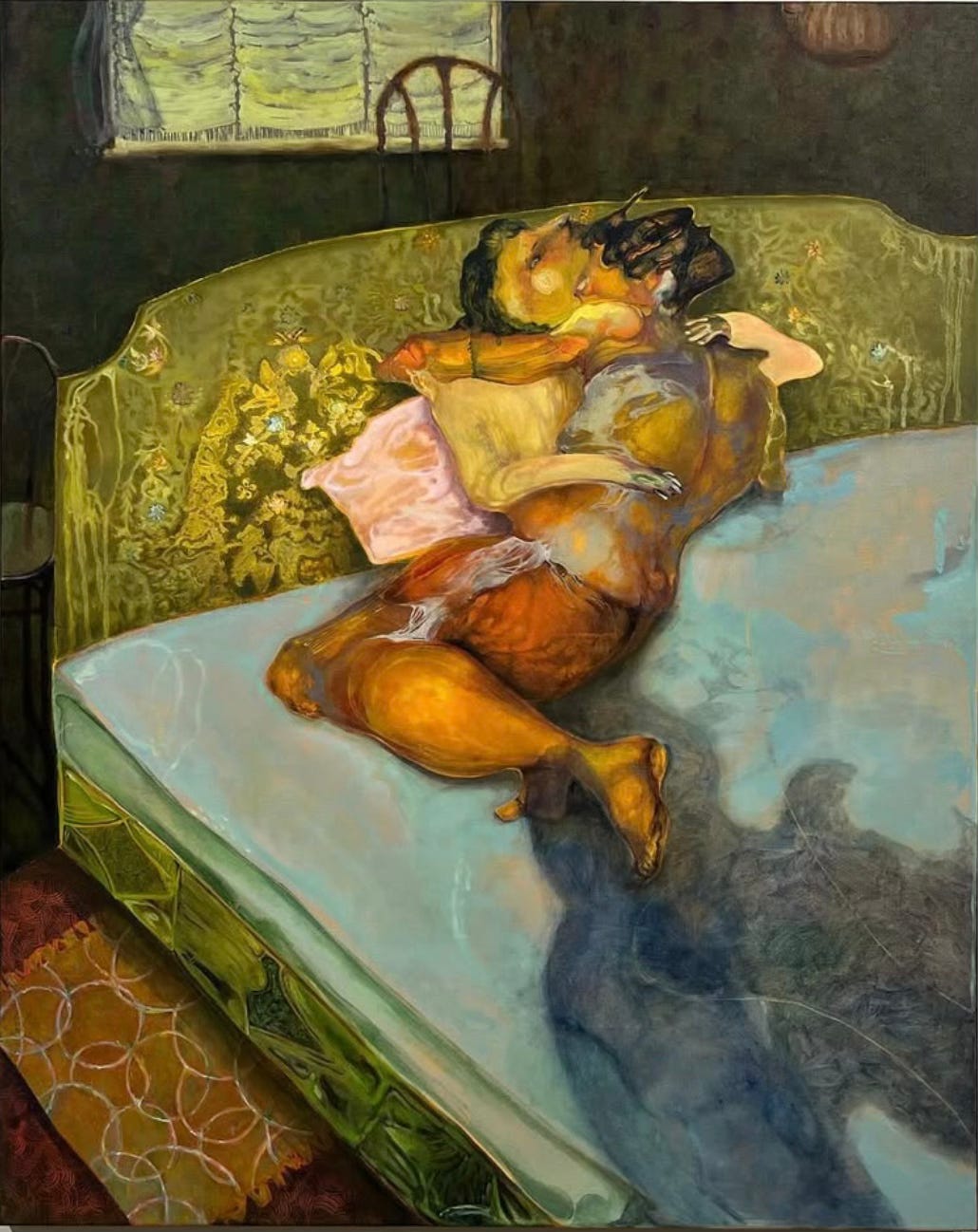
When asked why her paintings often contain scenes that feel intimate yet detached, even at times eerie with characters with bodies so distorted in a sense that eeriness emerge within her canvases, Tsang explained that these images are reflections of an internal condition where “too many feelings” are felt at the same time. The discomfort present within her works is therefore not constructed as spectacle. Rather, it emerges naturally from an inner landscape built from emotional experiences that remain difficult to reconcile long after the events themselves have passed. The complexity of being involved directly or as a bystander witnessing tragedies and attempting to unravel the intricacies of human relationships and the human experience is hence reflected in her work.
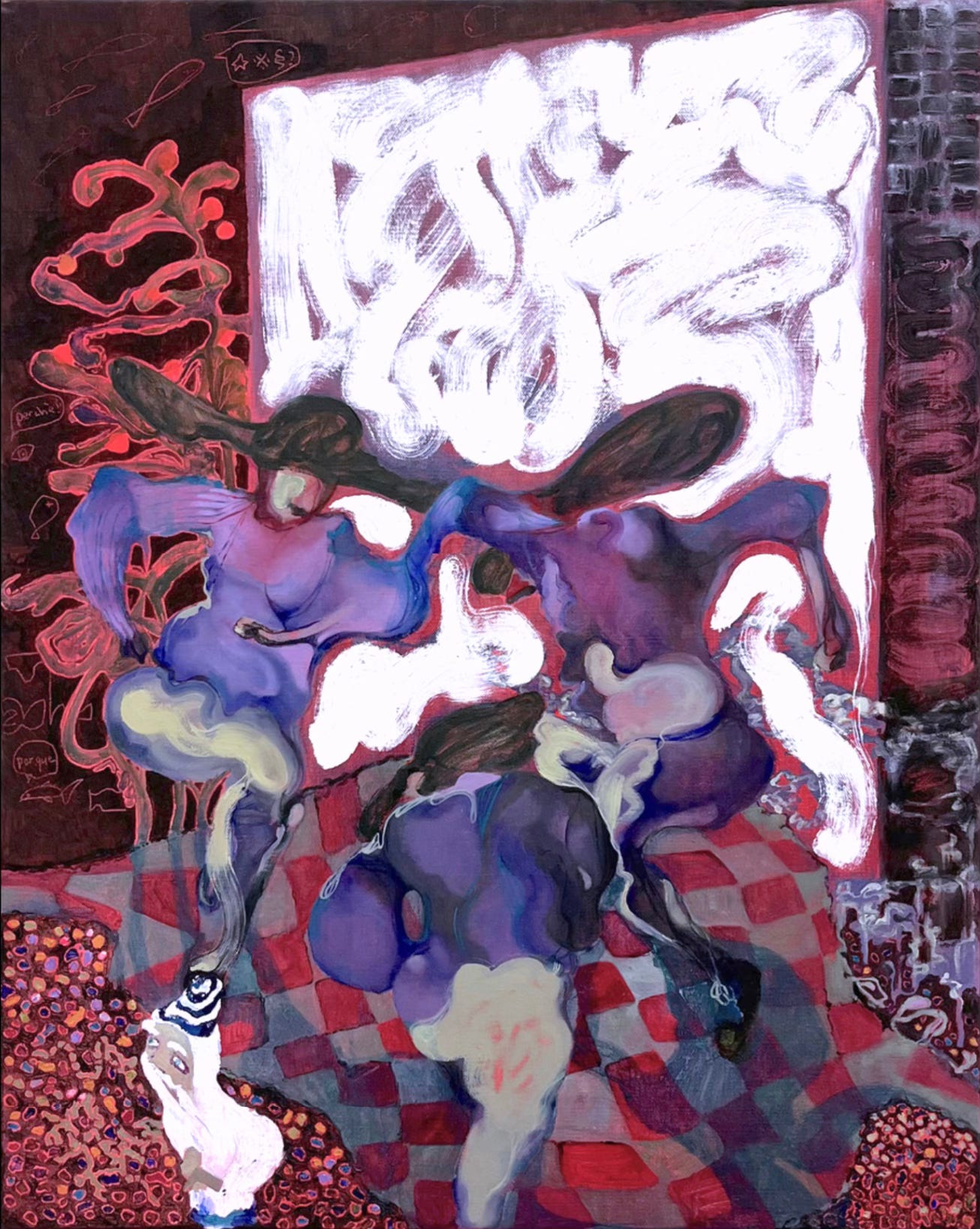
Tsang shared that several of her paintings were inspired by deeply personal encounters. Her work entitled “Party amongst rotten fruit” (2023), traces back to her exchange studies in the United Kingdom, where she witnessed the passing of life and experienced the aftermath left for the living. The painting depicts a seemingly ordinary evening in which she and another roommate danced together in a backyard as though nothing had happened the night before when the two witnessed a visceral, disorienting moment of death. The two figures painted in purple hues, almost resembling bruises are entwined in an ecstatic dance backdropped with dark red contrasted with white that intercepts the scene in gestural paint strokes. The colours, and the sense of chaos conveyed with the dynamic brushstrokes reflect the uncanny sense of disorientation that sits beneath the normality of the scene. The painting became less an illustration of the event itself, but a means of confronting and processing the emotional residue the event left behind.
This tension between painting and emotional residue recurs throughout her practice. Another work, “You said you would kill it this morning” (2024), was also painted after her experience following a tragic case between mother and child she observed as an outsider when she worked at a school. What struck Tsang was not the event alone, but the painful contradiction of a relationship that should have been intimate yet had become impossible to navigate. Such moments of emotional friction repeatedly surface within her paintings, and are transformed into fragmented narratives and ambiguous scenes as if Tsang is capturing the very nature of the ambiguity of the human psyche and relationships through the ambiguity in her paintings.
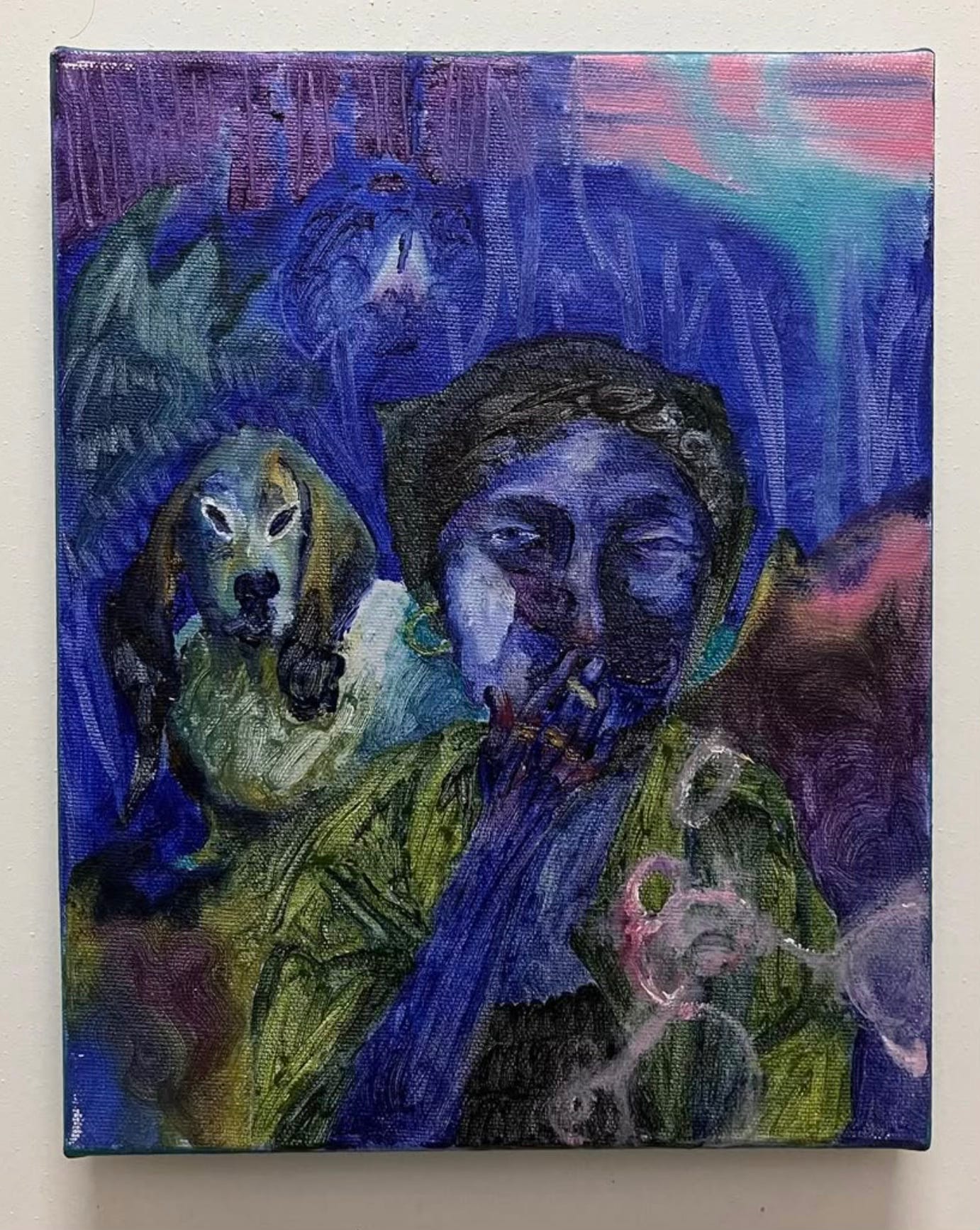
However, does not regard her works as attempts to speak on behalf of universal human experiences. Instead, her paintings are created from a more personal standpoint — she wishes to search for an outlet for emotions that have proven to be difficult to contain, alongside a quiet longing to be understood. It is precisely that this process of navigating emotions that could be difficult to digest on one’s own yet hard to find confidant in that makes her paintings become relatable to the audience. The narratives in her work remain deliberately incomplete, allowing viewers to encounter the works through their own emotional histories rather than a prescribed interpretation. This viewing process, to me, mirrors how us humans navigate difficult and complex emotions in social settings — there is only so much that you could verbalise in communication, and the rest is left for the listener to interpret and unpack in their own capacities and understanding of the world.
The ambiguity that lies in communication to Tsang, recalls a remark by the painter Andrew Cranston whom she greatly admires, “Omniscience is reserved for God. A narrative is always focalised by a limited consciousness.” Tsang’s paintings embrace this limitation. They do not seek to explain everything. Instead, they offer fragments, impressions, and emotional traces. Meaning remains partial, obscured, and unresolved.
The uncanny and eerie quality of her paintings therefore serves a purpose beyond discomfort. It becomes an active agent to open up her canvases to welcome introspection. Through estrangement, ambiguity, and emotional tension, viewers are encouraged to confront feelings that may remain hidden beneath the surface of daily life. Her paintings reveal to viewers that clarity does not always guarantee understanding. Sometimes, understanding emerges from learning to sit with uncertainty, fear, and the emotions that continue to linger long after their origins are far from sight.
While Tsang unravels the complex emotions that resist articulation, Jerome Leung’s work begin from the difficulty of articulation itself. Working through figurative portraiture, Leung paints solitary figures suspended in intimate yet ambiguous moments. Rendered through exaggerated proportions, geometric simplifications and a distinctive colonial muted palette, Leung renders his subjects into limbo-like forms that appear simultaneously present and distant, inviting and detached.
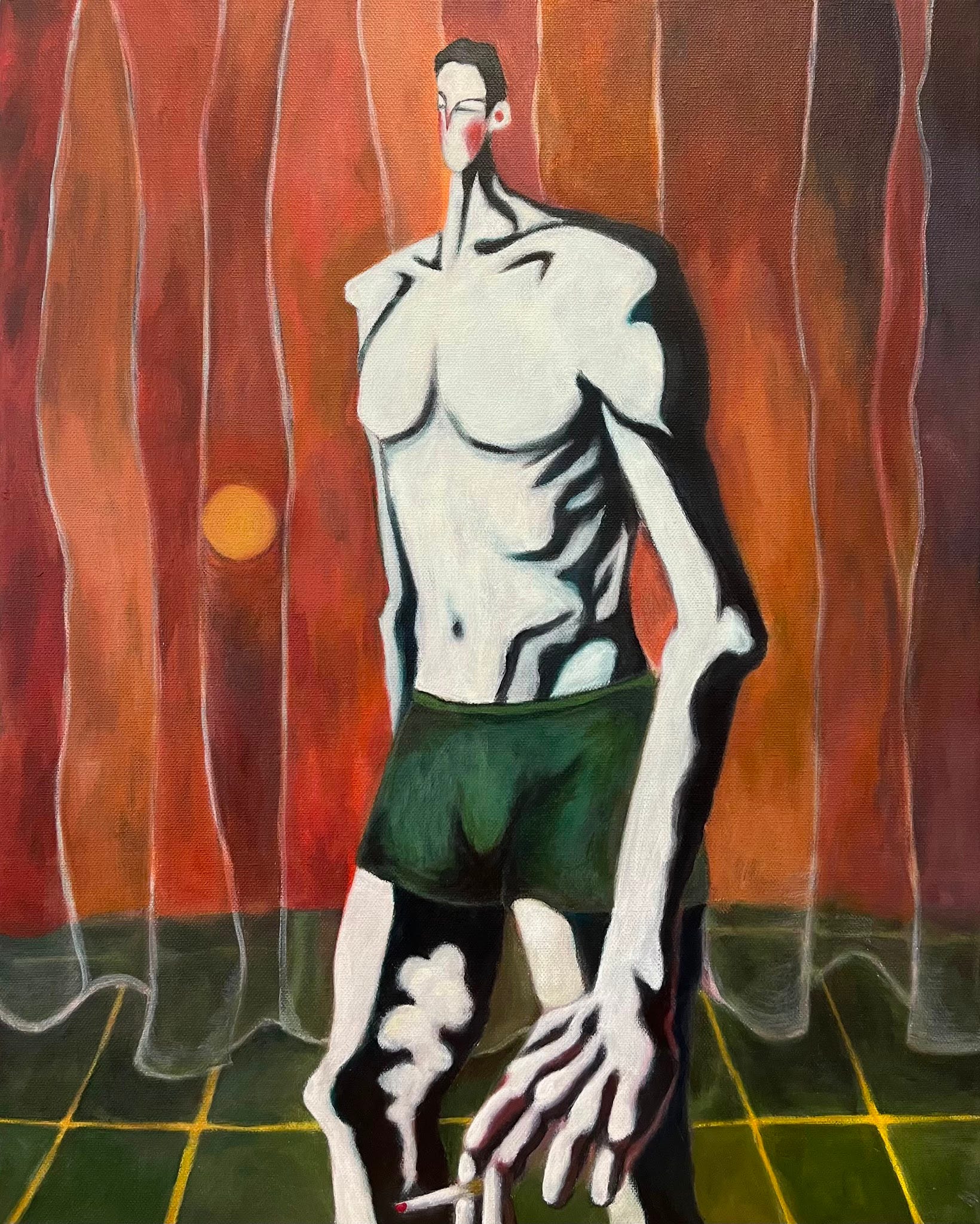
Having known Jerome for about three years since 2023, one thing that always intrigued me about his work would be the expressionlessness in the faces of the figures depicted in his paintings, and the seemingly empty gaze they had that altogether convey a sense of emotional distance and detachment. I finally took this opportunity as I interviewed him and asked him the whys behind it. Leung gave me a simple and partially self-deprecating response, “is it obvious that I have major commitment issues from my paintings?” Beneath his humour lies a fundamental concern that has shaped his practice. Growing up in what he describes as a dysfunctional Asian family, he found himself unable to understand and speak openly about his feelings. It was until his later training in journalism that he began to be aware of forms of communication that exist beyond language. Rather than only focusing on what people say and understand others on a surface level, he notices and grows fascinated by the unspoken language adopted as people try to express themselves — whether it is through a gentle shift in their gazes, the unconscious twitch of their fingers, or a quick turn of their heads. All these subtle nuanced codes in communication contributed to deepen Leung’s way of understanding emotions and how they are expressed.
The COVID-19 pandemic, alongside the political and social uncertainties unfolding both locally and internationally, formed the backdrop against Leung’s artistic practice. During this period, he also came out after spending twelve years in a Catholic all-boys school. Faced with multiple layers of personal and collective transformation, Leung found catharsis in what he describes as “blasting” his emotions onto the canvas. I find this choice of verb particularly revealing. “Blasting” suggests an act of outpouring marked by fervour, force, and urgency, as if through painting he communicates his feelings in a less calculated manner and treats painting as a release.
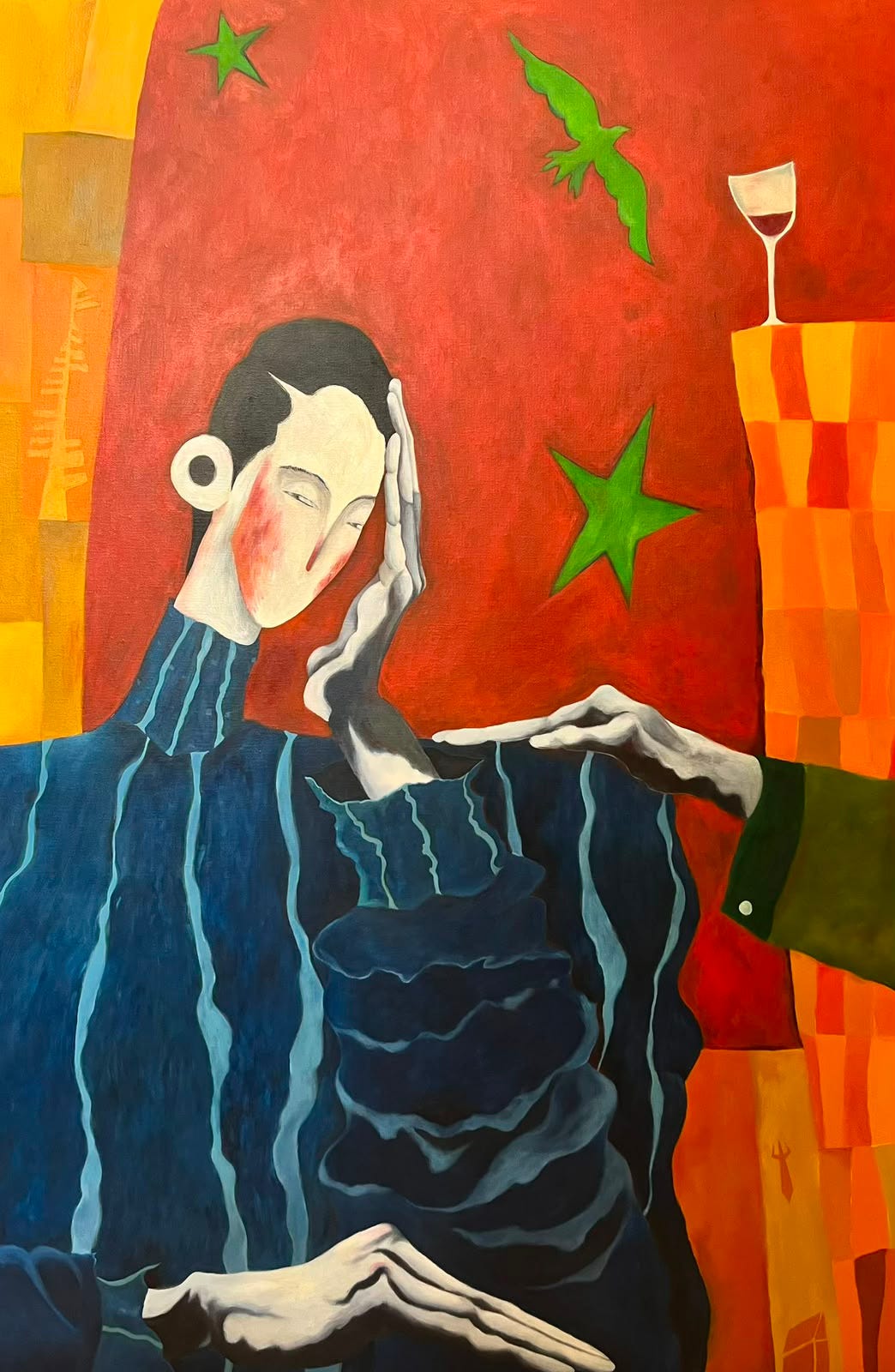
However, Leung’s painting has nothing close to being “explosive” and full of “blasts” in their appearance. Instead, they are populated by figures often described as both detached and inviting. This contrast points to the role painting plays within Leung’s practice. Rather than functioning as a channel for clear self-expression, painting itself becomes a means of the process that requires much rational dissection and processing of his emotions amidst uncertainty. The emotionally reserved figures that recur throughout his works embody a condition suspended between connection and withdrawal, intimacy and distance. They reflect not only the complexities of human relationships, but also Leung’s own attempt to navigate and render raw feelings into coherent understanding in a period when his personal transformation unfolded against a spectacle that is filled with uncertainties and changes.
The tension between catharsis and rational processing of emotions remain visible in his recent works. Exaggerated hands, martini glasses, fish, and other recurring motifs function less as fixed symbols but as traces of desire, longing and fleeting intimacy. Rather than constructing elaborate narratives, Leung is interested in preserving specific emotional moments that he deems “exciting”. A glance exchanged between strangers, the excitement of a new connection, the melancholy of distance, or the unpredictability that accompanies desire become frozen in time within his compositions. His paintings thus operate like snapshots of emotionally intense yet fleeting moments, capturing experiences that exist outside of right or wrong, and are beyond linguistics.
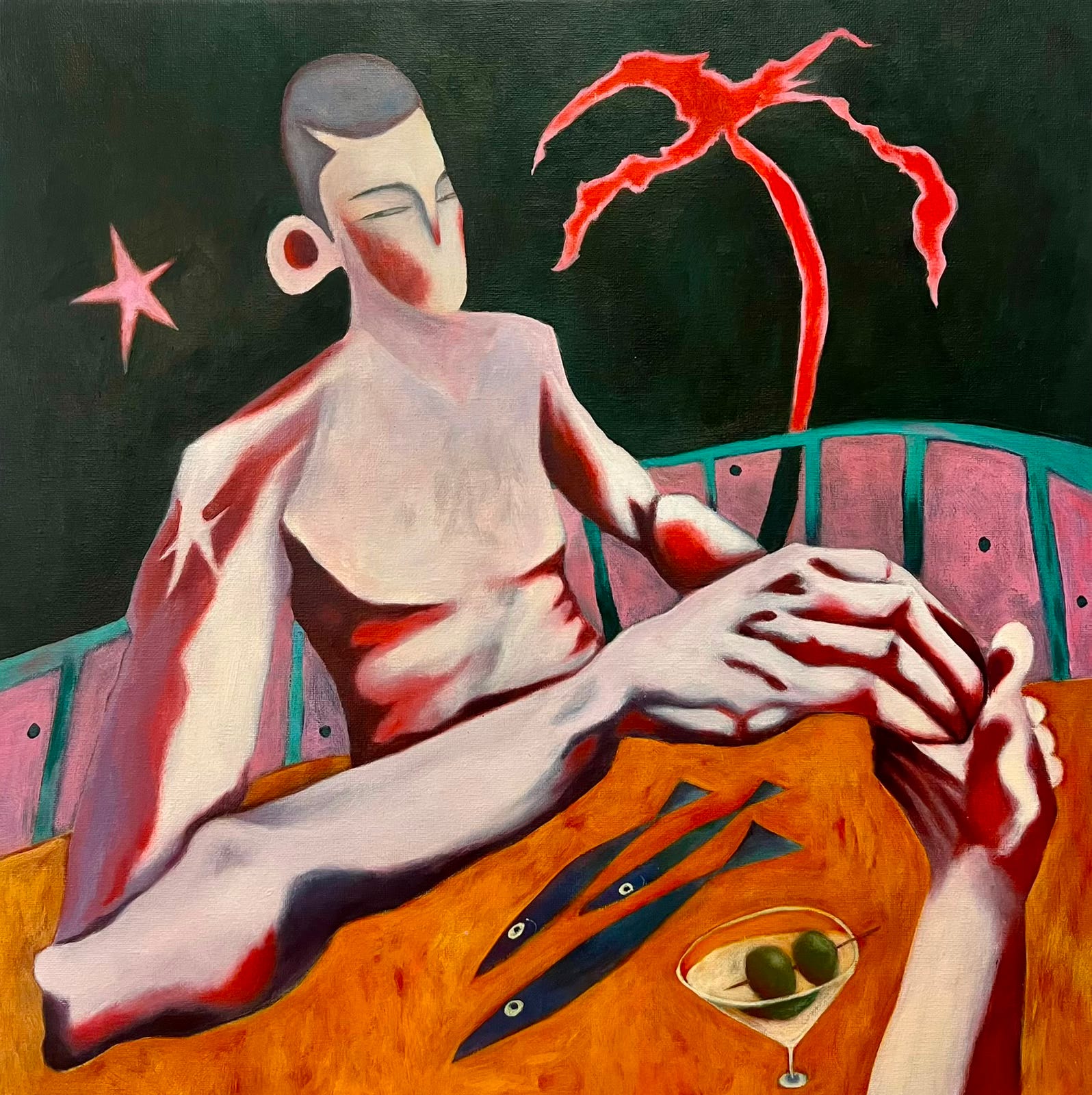
This dynamic is particularly evident in the faces of his figures. Their gaze often appears detached, drifting from the centre to the side. Their expressions are restrained as they are rendered mouthless. They embody a paradox Leung repeatedly revisits — the experience of being physically near another person while maintaining emotional distance. Human connections and intimacy therefore, in his paintings, are rarely complete. They exist as a space of constant negotiation, hesitation, projection, and uncertainty.
Physically close, yet emotionally miles apart. Perhaps the emotional distance that Leung portrays in his painting reflects that one should remain observant when forging human connections, as they occur not only in the obvious and verbal realm. Every pause between lines, unconscious gestures made and the slight change of gaze — these fleeting and quiet gestures beyond language often communicate more than words ever could. Through placing what is usually subtle and hidden into the subjects of his paintings, Leung records not of what him and other people say, but of what they struggle to say.
Across the practices of David Chan, Christine Tsang and Jerome Leung, the psyche reveals itself through multiple indirect traces. Chan’s intuitive process produces symbols and forms that evoke history, ritual and spirituality without consciously seeking to communicate them. Tsang approaches the psyche through emotion and transforms difficult experiences into uncanny and ambiguous images that resist definitive interpretation. Leung meanwhile, turns towards the non-verbal realm and observes how non-verbal bodily cues often communicate more than language itself. Together, their works suggest that intuition is neither mystical nor irrational. It is a means through which inner experiences get channeled into the world. Whether through symbols, emotions, or gestures, the three artists reveal to us that the human psyche often manifests itself most clearly through the very things we do unconsciously and — intuitively.
Subverting Heritage
It is almost a cliché to describe Hong Kong as a multicultural city. The phrase appears so often in official narratives, tourism campaigns and discussions of the city by outsiders that it almost becomes a reductionist and empty descriptor of what our city has to offer. Yet, within this seeming “blanket” statement lies a more complex reality. Contemporary identities are regularly singular given globalisation and the complexity of histories. Identities could no longer be merely defined within national, ethnic and geographic boundaries, but in way more plural forms. Everyone inhabits multiple cultural positions simultaneously, carrying overlapping histories, languages, and affiliations that often resist straightforward categorisation.
The artists gathered under Subverting Heritage reflect this condition. Rather than approaching their own identities and heritage as stable inheritance or of fixed origins, they engage with it as something fragmented, lived, learned, and continually reinterpreted. Their practices emerge from personal experiences of navigating various cultural and ideological frameworks. Questions of belonging are reflected in their work as an idea that could not be resolved through returning to a single root, but through the constant movement and negotiations between different histories and ways of being.
Whether it is explored through diasporic experience, mixed cultural backgrounds, or reflections on traditions, the artists challenge the assumption that heritage and tradition must be preserved in its most pristine and original state. Instead, heritage becomes fluid — where it could be questioned, deconstructed, reassembled, and even subverted. In doing so, they reveal that identity is not a fixed destination, but is rather an ongoing process of construction and becoming.
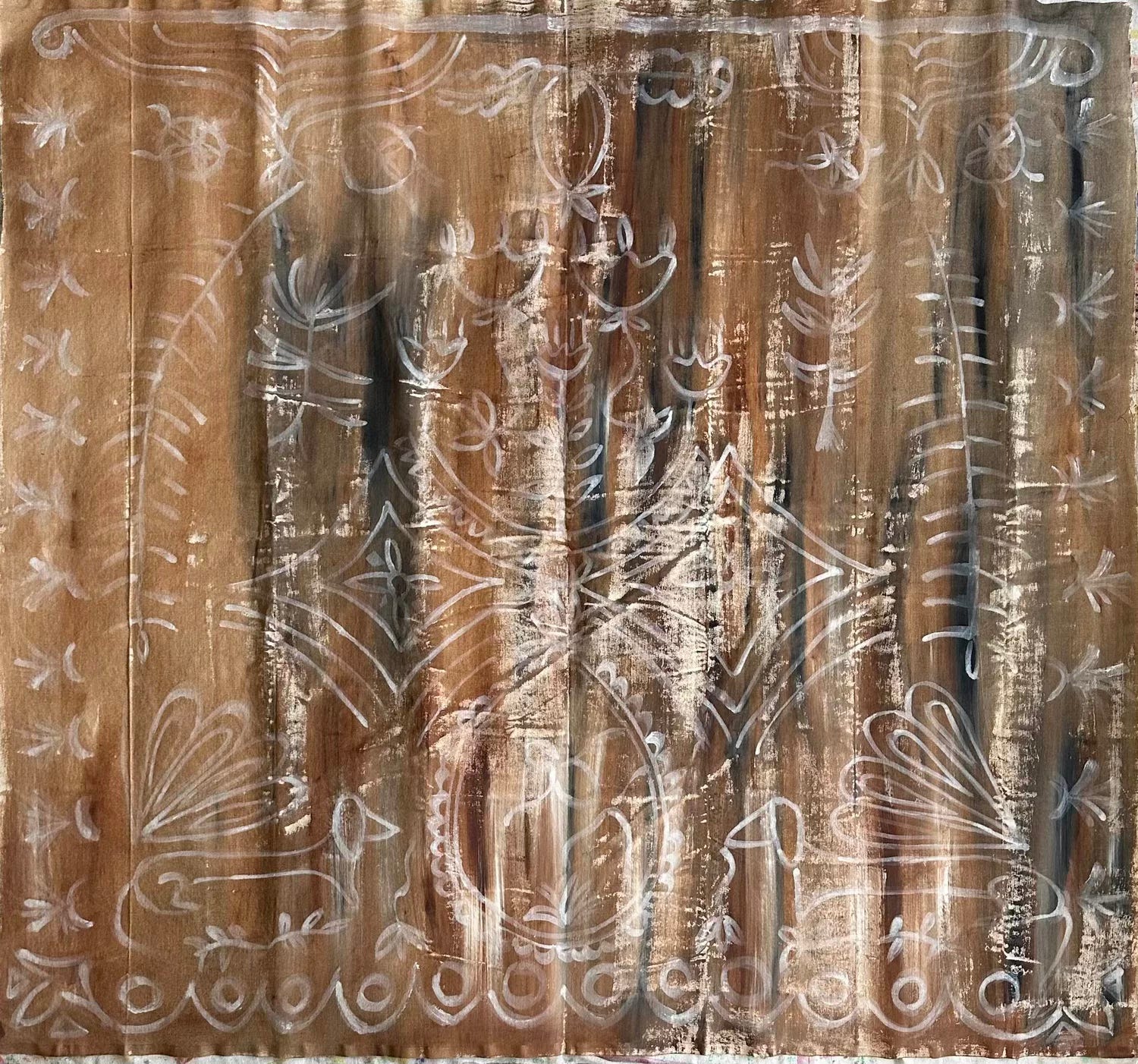
Culture, heritage and history are inevitably timed notions. These are the frameworks that guide individuals and civilisations to construct stories about themselves, hence forming personal and collective myths from the accumulation of experiences, beliefs, and memories throughout history. Speaking about her recent series, With Regard to Myth, Sai Pradhan reflects on this process of myth-making itself. She notes that myths “form the scaffold upon which cultures and individuals hang their identities off from; they are of a certain time and place, and yet timeless. They are also often prosaic objects or common human experiences elevated to the extraordinary.” Her fascination with how stories acquire meaning over time, and how myths are constructed from ordinary experiences informs a body of work that transforms culture and heritage from fixed historical inheritances into narratives that remain timeless, fluid and continually authored.
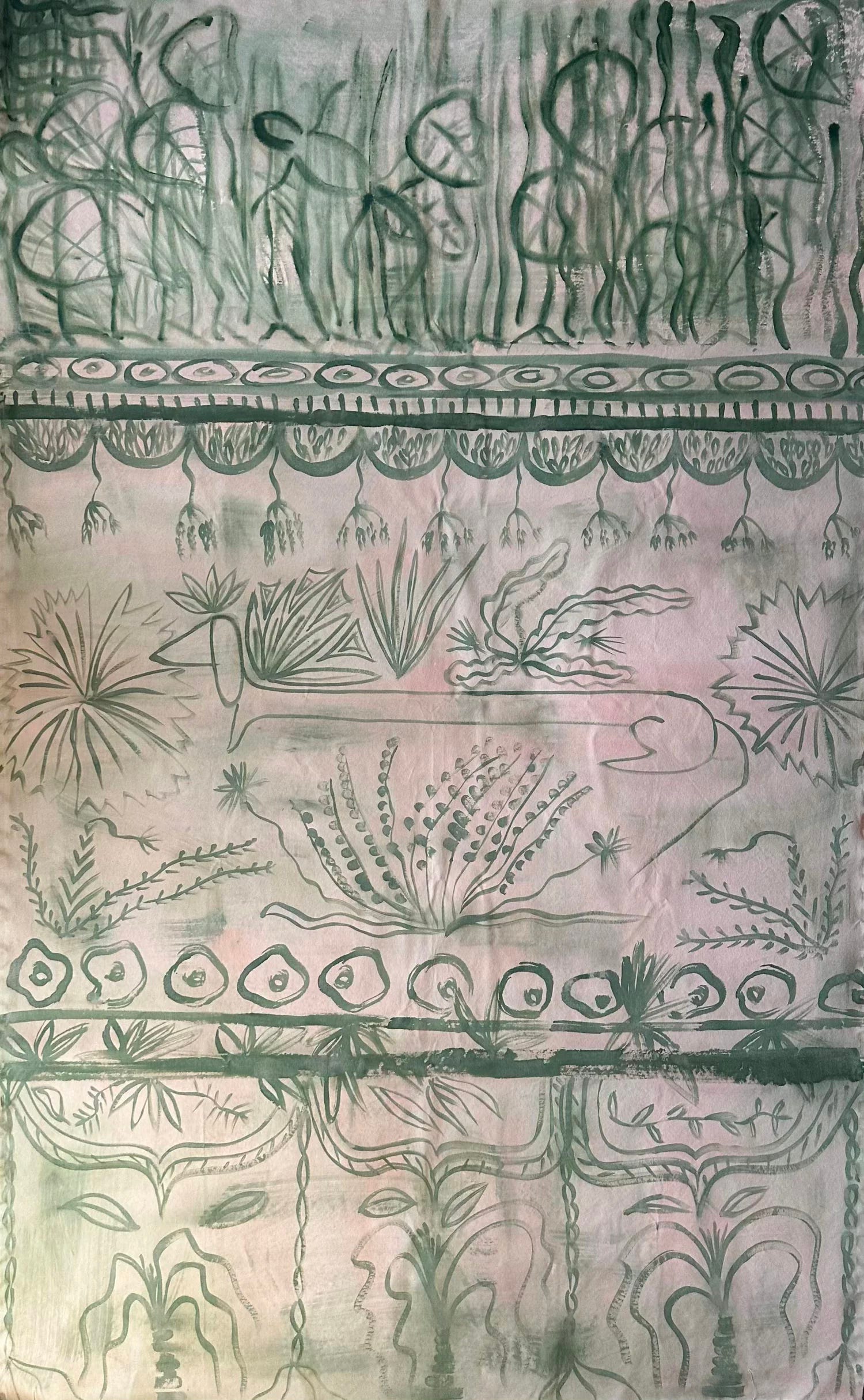
The series is pivoted on three recurring motifs — a dog, a gecko, and an egg, in which each of them originates from Pradhan’s personal life. The dog emerges from her experience of caring for her rescue dogs, the gecko stems from a myth passed down by her grandmother which inspires reflections on the passage of time, and the egg draws upon its long history as a symbol of abundance, fertility, possibility, mortality, and paths not taken. Yet within her paintings, these motifs cease to function merely as autobiographical references alone. Instead, through repetition, recombination and their juxtaposition with carefully constructed compositions, they are elevated into symbols capable of carrying meanings far beyond their original contexts.
This process of visual transcendence is central to Pradhan’s practice. Just as myths convert ordinary experiences into extraordinary narratives that transcend their original time and place, her paintings perform a similar function with her juxtaposition of familiar motifs within expansive architectural settings and lush decorative environments that draw inspirations from the various cultural and everyday landscapes in her life. From South Asian ceremonial torans and Art Deco architectural elements to intimate domestic objects and coastal vegetations found around her residence in Hong Kong, these elements are woven together to form a visual language that reflects Pradhan’s lived experience as an artist who have a rich cultural lineage from India, the United States and Hong Kong.
Having employed such witty juxtapositions within her canvases, With Regard to Myth therefore challenges fixed notions of heritage and belonging. Instead of attempting to trace to a singular lineage or to return to one single point of origin, Pradhan’s paintings suggest that identity itself may be mythological in nature. It is constructed through stories, memories, inherited narratives, and personal acts of meaning-making. Heritage thus, is reflected in her work as something that is lived, and continually assembled and reassembled through ordinary experiences, it is not a singular and static inheritance to be preserved. Her seemingly “prosaic” motifs reveal how myths, histories and cultural identities are constantly being created, revised, and transformed.
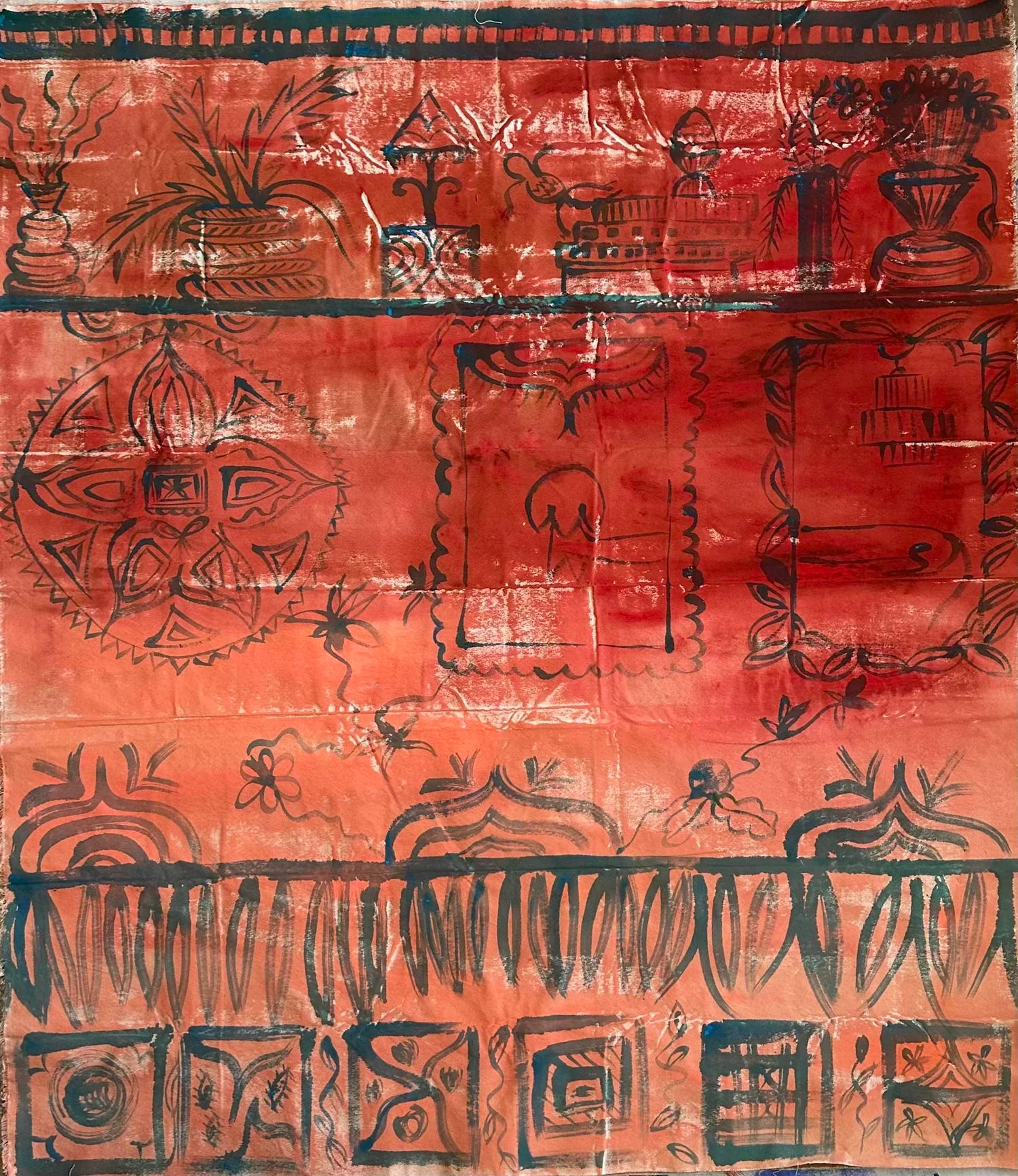
This sensibility extends into her choice of materials. Painted on unprimed cotton and presented as large hanging tapestries, Pradhan’s works embrace texture, creases and imperfections. As she notes, “I love creases and texture, and shy away from plasticky perfection.” Her rejection of polished surfaces mirrors the very nature of myth itself. As though the word “myth” exudes an aura of grandeur as they distill meanings and human behaviour over a long period of time in history, they ultimately are still human experiences — and to be human is to be imperfect. The raw cotton absorbs paint unevenly, allowing the fabric to interact with the paint freely without a manufactured, pristine surface that is seen in primed store bought canvases. With Pradhan’s embrace of imperfections and unpredictability in how textures and material interact in her artistic process, she renders her work hard to be placed within a specific historical moment. In this sense, With Regard to Myth becomes not simply a reflection on myths inherited from the past, but an ongoing dialogue and exploration of how myths continue to emerge in the present, manifested by ordinary people in the mundane, and becomes extraordinary through the passage of time.
While Sai Pradhan explores how myths are constructed in her work, Genie Hui’s practice examines how inherited systems of belief shapes personal understanding of the self. Working across Gongbi (工筆) and ceramics, Hui draws inspiration from visual languages associated with religion, spirituality and ritual. However, instead of reaffirming these traditions in their conventional forms, Hui repurposes them to explore interior emotional landscapes, transforming cultural inheritance into a language for self-reflection.
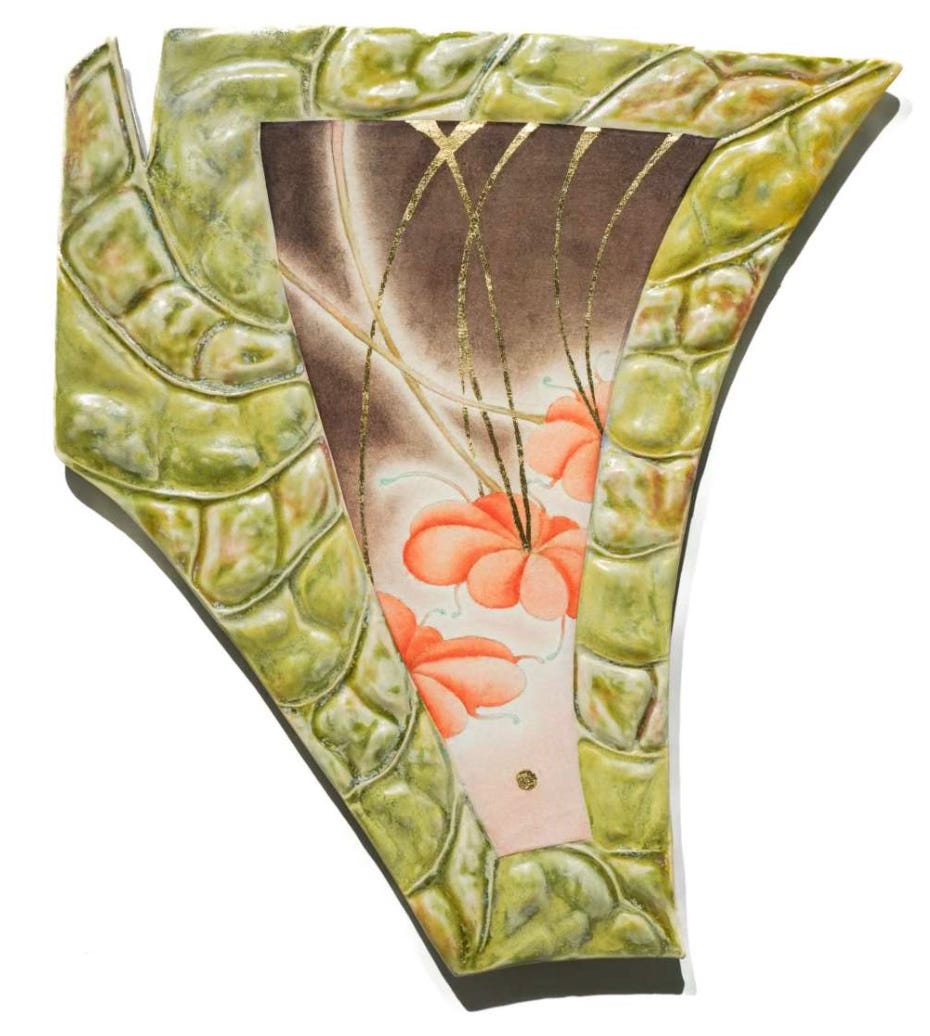
Hui first started her practice in combining Gongbi painting and ceramics when she was preparing for her graduation exhibition. During her preparation, she felt that the two-dimensional format of painting alone could not fully communicate the feelings of uncertainty, struggle and faith that she wanted to convey through her work. In order to make whole of her narrative, she constructed ceramic-forms that extended beyond the picture plane and into physical space. What initially began as an attempt to resolve a formal problem eventually evolved into an ongoing dialogue between two seemingly distinct mediums. By mounting delicate sheets of painted Xuan paper (宣紙) onto ceramic surfaces, Hui developed a unique visual language that allows painting and sculpture to occupy the same space.
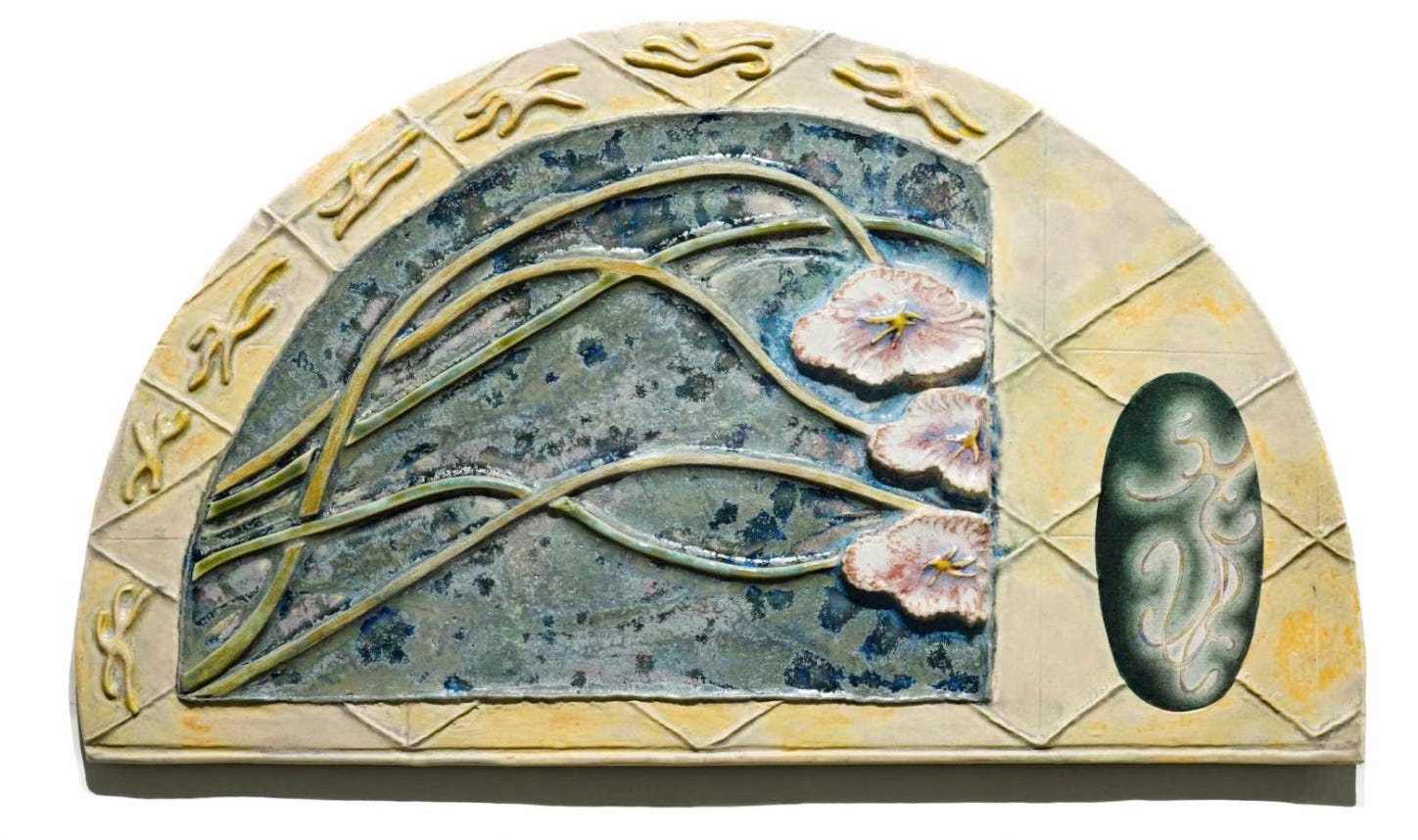
Her sculptures often carry strong associations with religious artefacts. The symmetry and intricate designs conjure the imagery of ancestral tablets, gravestones, and devotional plaques found within temples and sites of worship. However, Hui did not intend to depict religion directly, but to manipulate these forms in order to construct a framework to explore what she describes as the “spirits” that reside within one’s inner world. The meticulous qualities of Gongbi painting with its precision and luminosity hence become a perfect aesthetic to express what she perceives as an Eastern understanding of spiritual presence — spirits that are quiet, elusive, and softly radiant.
Questions of belief were asked frequently in her previous series. As a Thai-Hong Kong artist raised within a family influenced by Thai Buddhism, she grew up visiting temples with her mother, and listened to folklores and supernatural tales. Despite the religious influences she received from her family, she did not become religious herself. Instead, she started to wonder why faith commands such profound conviction, how spiritual systems shape societies, and what compels individuals to place trust within forces beyond empirical understanding. These questions guided her to explore, experiment and employ religious imagery in her earlier works before her recent shift in subject matter, in which she turns increasingly inwards to explore her internal experiences and psyche instead.
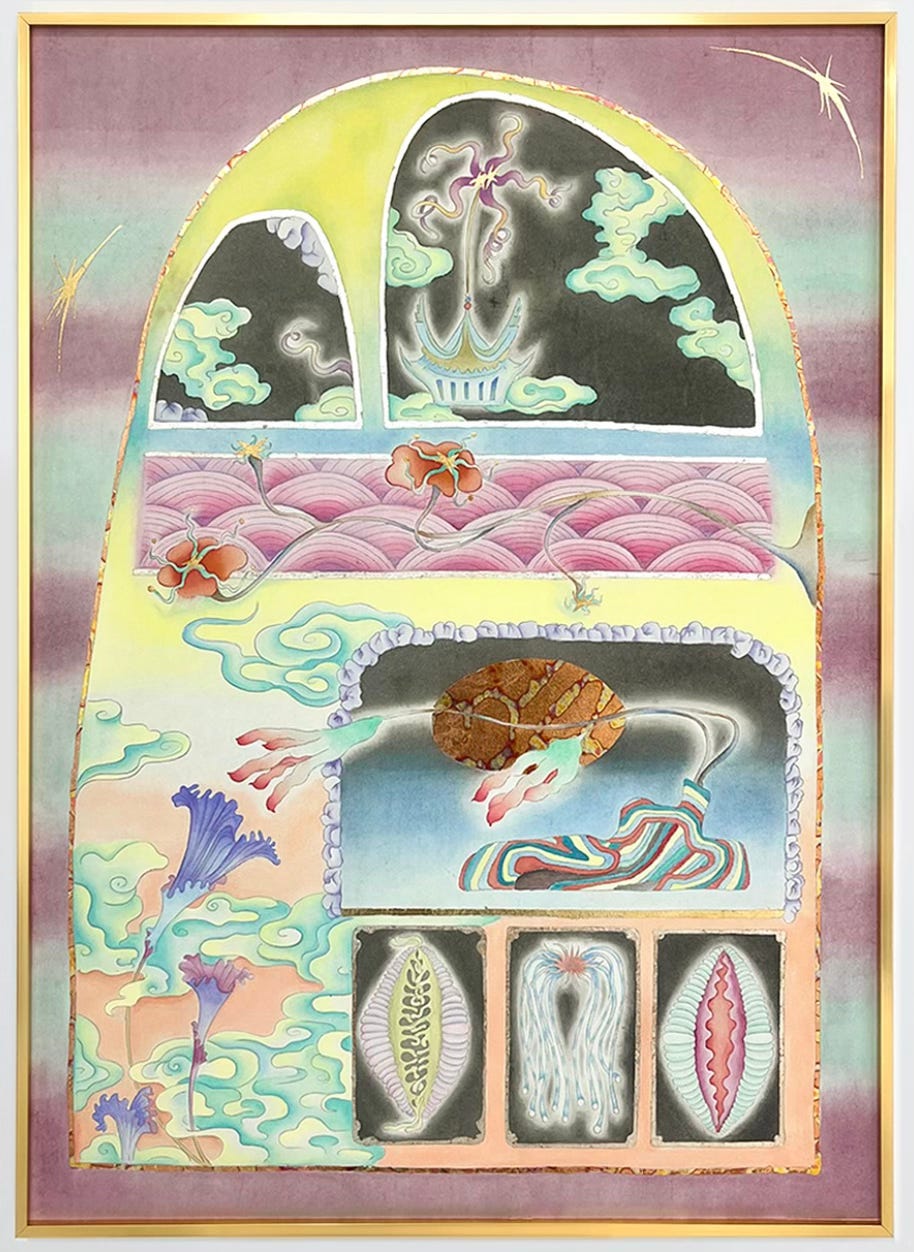
This shift is visible in the recurring organic forms that populate her works — partially corporeal, natural and spiritual, the creatures within her paintings and ceramic surfaces resist fixed classification. Inspired by cells, blood vessels, skin, internal organs, plants, and Buddhist iconography, they appear uncannily familiar and difficult to identify. Hui describes them as manifestations of inner voices and spirits that reside within herself. Through the use of ink washes, oxidising gold and silver leaf, and surfaces that gradually change over time, these entities within her work seem to possess lives of their own. Her works never remain entirely fixed — just like memory, faith and identity, they remain constantly in flux and ephemeral.
In Hui’s work, we can observe how she approaches heritage and traditions as notions that could be continually reinterpreted despite their religious qualities. Through taking religious symbols, traditional painting techniques and inherited cultural narratives out of their original contexts and redirecting them to become tools to explore her own inner world as a contemporary subject, heritage in her practice is therefore neither static nor nostalgic. It becomes an active site through which personal belief, imagination and emotional experience is explored and reimagined.
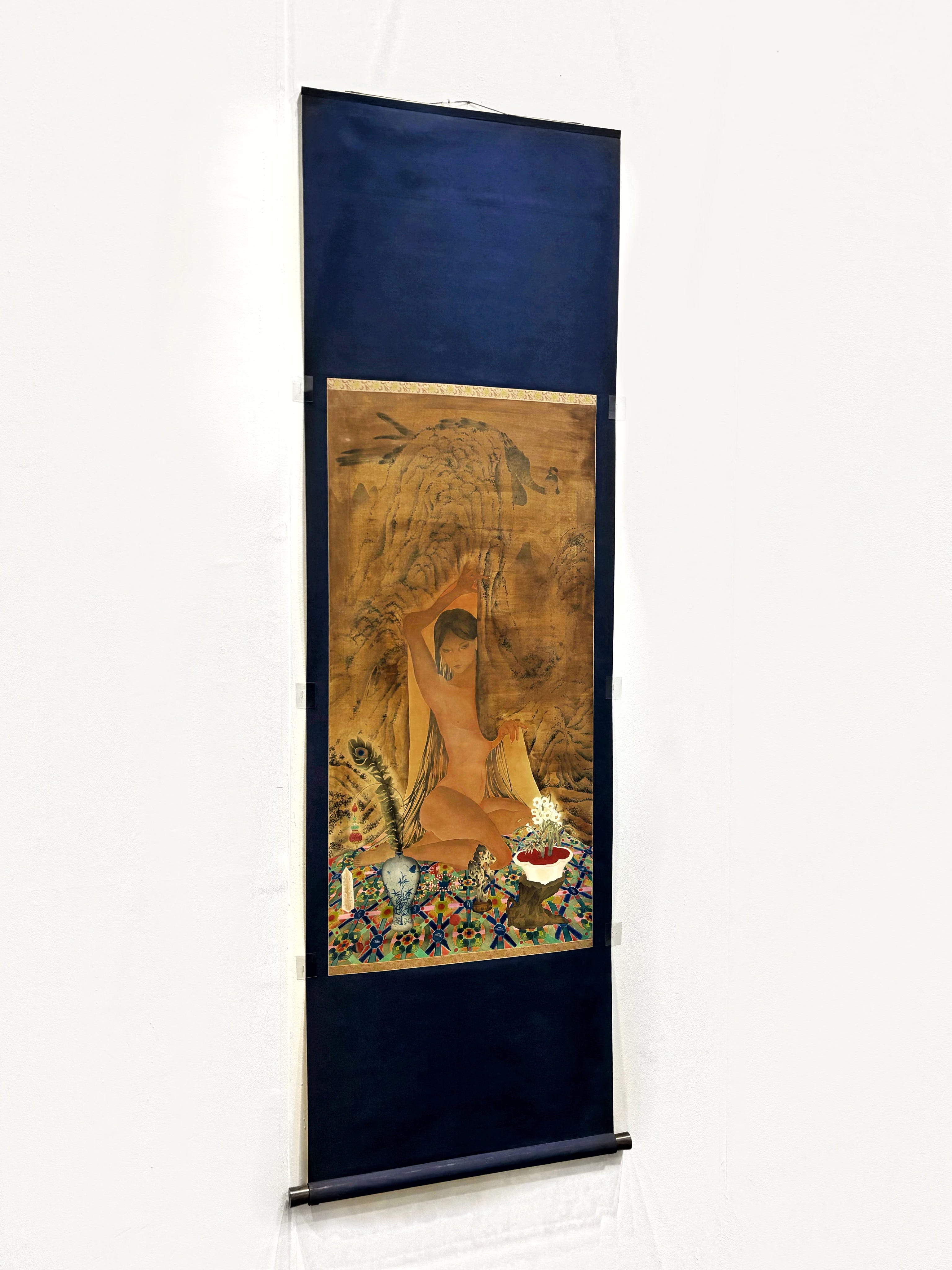
Moving on to the next artist is my favourite diva in the art world. Ferrance Leung, an artist working primarily with ink painting also approaches heritage as a notion to be contested similar to the approaches of the aforementioned approaches adopted by Pradhan and Hui that asks not about how traditions could be preserved, instead, his practice asks how inherited visual systems continue to shape contemporary understandings — particularly in the realms of identity, gender, and power.
Within his intricate ink painting practice, Ferrance draws extensively from the visual traditions of Shanshui painting (山水畫) and bird-and-flower painting. Throughout his works, mountainous landscapes, botanical forms, and human bodies are frequently intertwined. His engagement with these traditions is not motivated by a sheer force to continue aesthetics and visual cultures from history, but rather to re-examine the cosmological frameworks embedded within classical Chinese art and how it could be applied in constructive narratives in contemporary perspectives. As Ferrance notes, throughout Chinese visual culture, Shanshui has historically extended beyond landscape itself. From religious murals and ritual objects to representations of immortality and the afterlife — mountains and bodies have long existed in a deeply interconnected relationship. His practice begins from this historical observation before exploring visual possibilities when such inherited systems are viewed through present-day concerns.
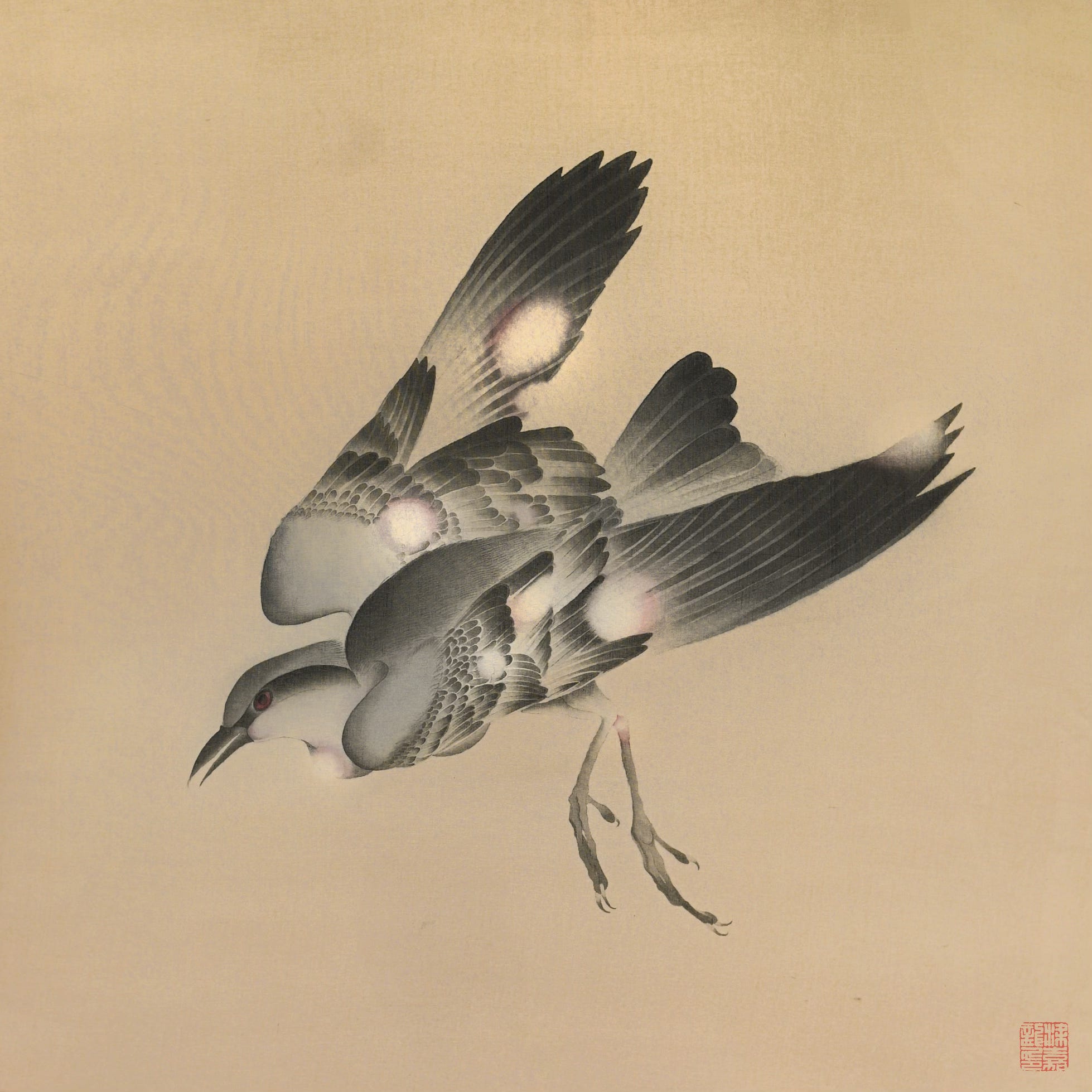
Ferrance’s recent work could be characterised by his witty use of queerness as a critical strategy. While historical representations that merge landscape and the body have often privileged the male subject and reinforced patriarchal structures, Ferrance deliberately destabilises these conventions. The human figures within his works are often depicted to be androgynous, and embodies sexual characteristics that are obscured or entirely absent. This ambiguity serves not merely as a representation of queer identity, but as a challenge to the hierarchies rooted in traditional visual culture. Human, animal, plant and landscape are placed into states of equivalence, hence suggesting a sense of coexistence that resists rigid categorisation.
This concept of Ferrance’s is particularly made visible in his recent series, The Art of Bird-Slaughtering. Through the imagery of mirrors, bodies and references to traditional spring palace paintings, Ferrance investigates the ways that masculinity is inherited, performed, and reproduced across generations. The homoerotic encounters depicted within these works do not merely introduce queer desire into historical forms. Instead, they expose the tensions that already exist within patriarchal structures themselves. Desire, intimacy, shame, power and vulnerability become entangled within images that simultaneously attract and unsettle the viewer.
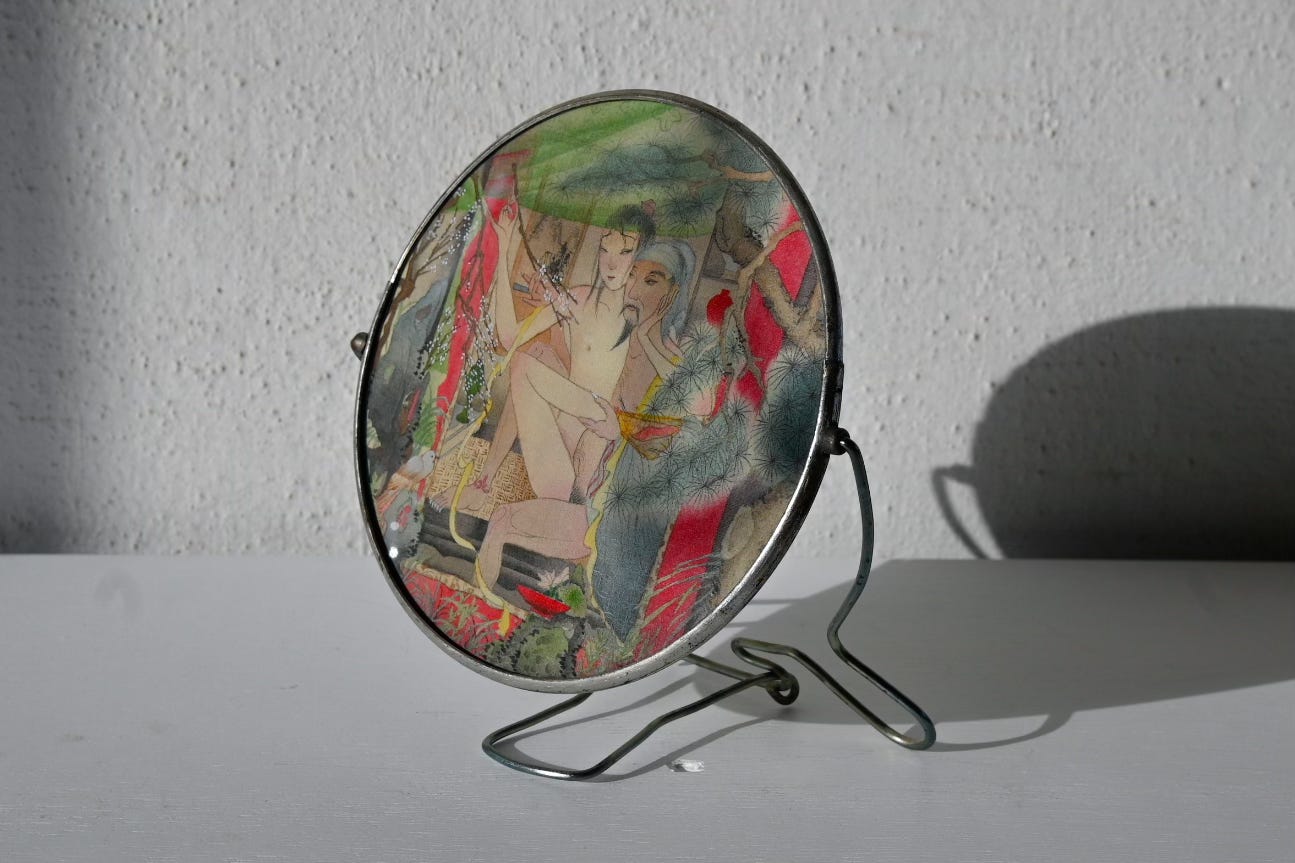
The materiality of the mirror employed in the piece showing at N+ 3.0 under his The Art of Bird-Slaughtering series also further complicates this dynamic between allure and discomfort. Historically, spring palace paintings often incorporated voyeuristic figures who observed intimate scenes from the margins. Ferrance adapts this visual device by positioning the contemporary viewers within the role of voyeurs. The very experience of active looking becomes implicated and highlighted within the work itself. Viewers are rendered into active participants to observe a broader reflection on desire, masculinity and the structures that dominate how they could be understood with the interrogating materiality of mirror itself — and they are denied to be in the positions as passive observers of historical imagery without reflections.
Ferrance’s witty amalgamation of visual traditions from Chinese painting and textures hence reconfigures how traditions could be understood. It is not treated as sacred nor is it discarded in his practice — they are opened up for reinterpretations, critiques and transformations. Through inserting queer bodies, contemporary anxieties and questions of power into classical visual languages, Ferrance demonstrates how tradition remains relevant precisely because it is capable of being challenged. In his work, heritage ceases to function as a fixed inheritance and instead becomes an active dialogue between the past and the present.
Across the practices of Sai Pradhan, Genie Hui and Ferrance Leung, heritage and traditions appear less as destinations to return to, but rather as materials to work with. Myths, religious symbols, cultural traditions, and historical visual languages are not treated as fixed truths and absolute ways to approach the practice of art. They instead become living frameworks through which contemporary experiences are understood, questioned, and reimagined. Together, the three artists highlighted in the section reveal that identity is not constructed through passive inheritance, but through continual acts of reinterpretation. As though human existence remains bound by time, the ideas and stories that shape it often transcend their origins and acquire new meanings as they pass between generations throughout history. Heritage therefore survives not through preservation alone, but through its capacity to be challenged and transformed they get to be made relevant once again in the daily lives of the contemporary quotidian narratives.
N+ 3.0
To whoever has made it this far, thank you for staying with me.
Even after ten thousand words, what has been presented here remains only a partial reading of what N+ 3.0 has to offer. This year, we are lucky enough to bring together 55 artists working across an expansive range of mediums, methodologies and conceptual concerns. Each of them deserve far more attention than what a single essay could provide. The four thematic threads explored throughout this text are therefore not intended to serve as definitive answers to guide one to explore the exhibition, but rather as one possible way to navigate major themes that artists in the present are working with.
What continues to amaze me about the N+ project is the opportunity it provides to observe the breadth of artistic thinking taking place in Hong Kong today. Across the artists discussed in this essay, we encounter questions of technology, identity, memory, intuition, heritage, psychology, and the many ways individuals attempt to negotiate their positions within an increasingly complex world. While their approaches differ significantly, together they reveal a local art scene that is intellectually ambitious, deeply reflective, and remarkably diverse.
To reiterate, this essay really does not seek to provide a singular answer to what Hong Kong art looks like in 2026. No exhibition, curator or text could claim such authority. Rather, it is an attempt to document a moment in time and to contribute to an ongoing conversation about artists working in our city in the present moment. As Hong Kong continues to evolve, so too will artists’ questions, concerns and visual languages evolve in time. The task then, is not to arrive at any singular narrative or at any “final” conclusions, but to continue listening, observing and creating spaces where artists’ voices could be seen, heard and remembered.